Near the surface, however, ocean circulation is also influenced by winds, which are responsible for producing the large subtropical gyres in the Atlantic, both on the northern and southern sides of the equator. These gyres play an important role in marine ecosystems because they provide organisms on the sea floor with oxygen, which is then consumed in part by the decomposition of organic matter. If there is a paucity of fresh, cold, and oxygen-rich water transported into ventilate these areas, so to speak, oxygen minimum zones result.
A team of researchers from MARUM—Center for Marine Environmental Sciences and the Department of Geosciences, both of the University of Bremen, from Kiel University, and from the Lyell Centre at Heriot-Watt University in Scotland have now investigated how the weakening of Atlantic Meridional Overturning Circulation is connected to the ventilation of the shallow ocean. Their focus was on the tropical oxygen-minimum zone off northwestern Africa.
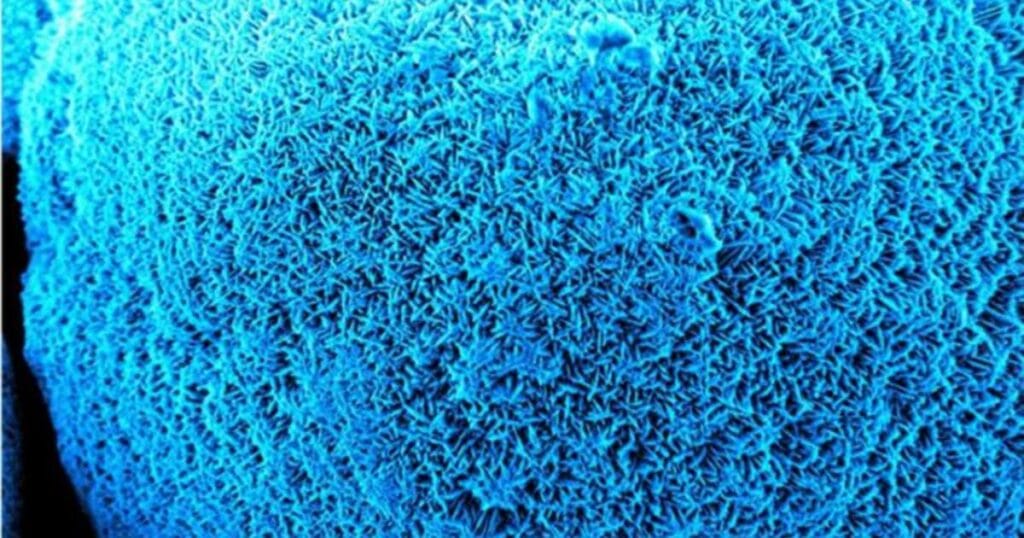
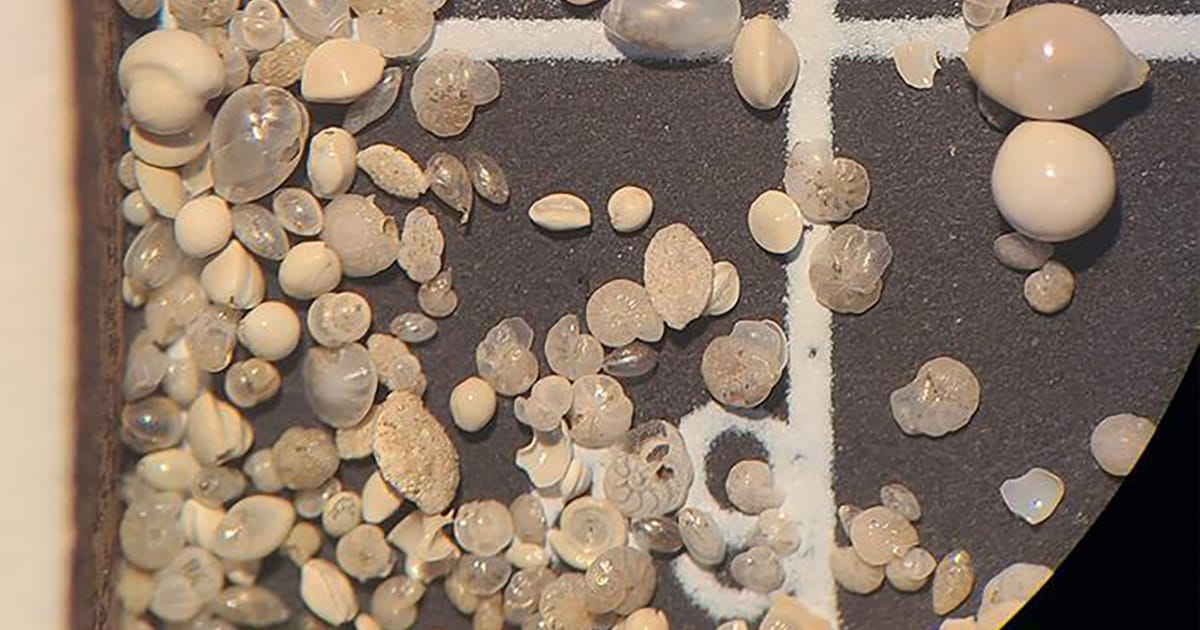
In their study, based on benthic foraminifera—microscopically small single-celled organisms that produce a shell and live on the ocean floor—the team was able to reconstruct changes in the oxygen content of the oxygen-minimum zone in the eastern tropical North Atlantic over the past 27,000 years.
“Benthic foraminifera react to changes in oxygen, which affects their distribution, among other things. Employing these small microscopic fossils, we studied how the oxygen content of the ocean changed at a time when the AMOC, according to research, was weaker than it is today. This provided us with insights into the effects of the AMOC strength on the shallow-water cells,” explained Dr. Sofía Barragán-Montilla. She earned her Ph.D. at MARUM and is now a research scientist in the Paleoceanography working group at the Institute of Geosciences at Kiel University.
The question of whether and how the AMOC will slow down in the future continues to be discussed in scientific circles. The team of scientists has taken the basic question a step further: What happens to the shallow cells if the AMOC circulation weakens? “We were surprised to discover how closely the oxygen content off northwest Africa is linked to the state of the Atlantic Meridional Overturning Circulation,” explained Dr. Stefan Mulitza of MARUM. In the deep Atlantic, a weakening of the meridional circulation leads to a decrease in oxygen content. The shallow layers of the Atlantic, on the other hand, are better ventilated with a decline in the AMOC. This is a result of stronger winds driving the subtropical gyre, which are intensified by greater temperature and air-pressure differences between the tropics and higher northern latitudes.
The first author, Dr. Sofía Barragán-Montilla, studied the benthic foraminifera that led the team to the findings of their study. “We discovered that in times of a weaker AMOC, more oxygen was present in the oxygen-minimum zone of the eastern tropical North Atlantic, which indicated a strengthened shallow cell.”
An additional finding of the researchers was that the intensity of the oxygen-minimum zone off northwest Africa is significantly controlled by ocean circulation and depends less on variations in oxygen depletion due to the decomposition of organic material.
The findings of the current study will continue to be investigated within the Cluster of Excellence “The Ocean Floor—Earth’s Uncharted Interface”, which is housed at MARUM. One research topic of the cluster is how complex ecosystems react under changing environmental conditions.