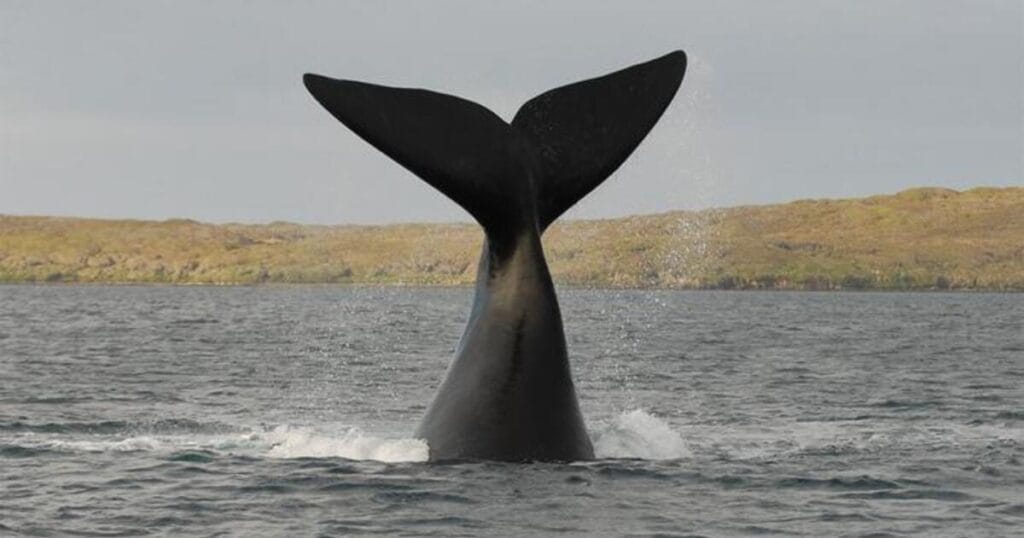
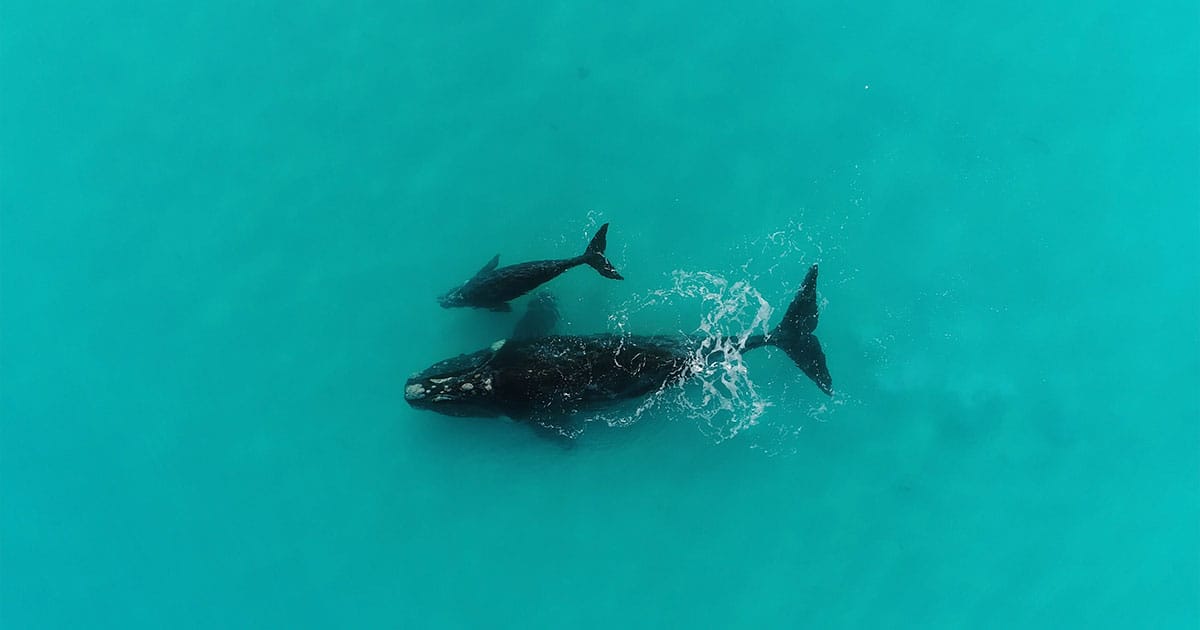
Southern right whale mothers fast throughout the months-long calving season and rely on stored energy to give birth, support their calf and travel thousands of kilometers back to their feeding grounds.
How lactating whale mothers—who require more energy than any other age class, including pregnant females—manage to conserve enough energy to successfully meet their own and their calf’s needs for such an extended period has been poorly understood.
To better understand this delicate balancing act, researchers from The University of Western Australia and Aarhus University in Denmark used drones to observe southern right whales off the South Australian coast.
Led by Dr. Kate Sprogis and Renae van Noort from the UWA Oceans Institute and School of Biological Sciences, the team recorded dozens of mother-calf pairs as they nursed and rested at the protected Head of Bight calving ground.
“The remoteness of this area, and the fact it is protected from human activity during calving season, provided a unique perspective for observing the whales’ energy-conserving behaviors in a pristine, undisturbed environment,” Dr. Sprogis said.
The researchers found whale mothers rested on average 33 percent of the time, while their calves rested around 13 percent of the time.
They were particularly fascinated to observe that 25 percent of the mothers often lay upside-down—bellies to the sky—as they rested at or just below the surface.
“To our knowledge, this behavior has not been recorded in any other large whale species,” Ms. van Noort said.
“We only observed it in lactating mothers and one heavily pregnant female—never in other adults, juveniles, or calves.”
The researchers noted a significant relationship between the presence of upside-down resting and the proportion of time the calf spent nursing, with nursing decreasing as upside-down resting increased.
“This behavior may be a way for the mother to limit how often her calf is nursing, as her mammary slits, which is where the calf nurses from, are out of reach. This could enable her to better manage her energy reserves,” Ms. van Noort said.
“Upside-down resting may also be a way to prevent overheating, given southern right whales lack the dorsal fin which other marine mammals, such as dolphins, use to regulate their temperature.”
Dr. Sprogis said regardless of the reason, the behavior was puzzling in such a large whale species as it made them more vulnerable to vessel strike—a leading cause of death in right whales.
“Resting the ‘wrong way up’ means they take longer to rotate to breathe and swim away quickly if a threat, such as a boat or ship, approaches,” Dr. Sprogis said.
“Due to the vulnerable nature of resting, we recommend if you see a whale, give them lots of space and to reduce your speed if you are in a boat.”
The findings have been published in Mammalian Biology, with the authors also writing about the research in The Conversation.