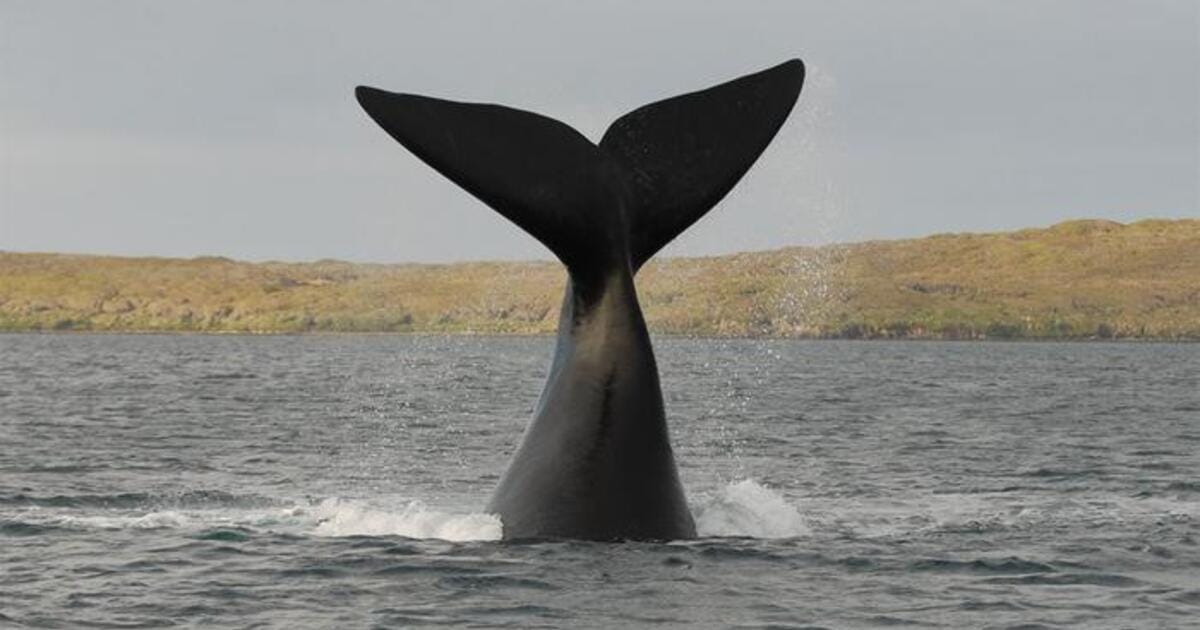
Samples collected by the South Australian man have contributed to a groundbreaking study of the diets and microbiomes of southern right whales, led by Macquarie University in Sydney and Waipapa Taumata Rau, University of Auckland.
The whales are called tohorā in Aotearoa New Zealand.
After dwindling to as few as 400 individuals early last century because of whaling, tohorā have bounced back to around 15,000. Distributed across the Southern Hemisphere, the whales are filter feeders who migrate between higher-latitude feeding grounds and lower-latitude socializing and breeding grounds.
The scale of the animals’ recovery has varied widely across regions, and global warming poses fresh challenges because warming waters and declines in Antarctic sea ice are altering the availability of a key food, krill.
The changes have been linked to reduced birth rates and female fitness in some tohorā populations.
Getting a more precise fix on the whales’ diets may help scientists to forecast how the creatures will adapt.
That’s where the samples stashed in Keogh’s freezer come in.
His collection of poo from Fowlers Bay in South Australia was added to samples from two locations in South Africa and from New Zealand’s sub-Antarctic Maungahuka (Auckland) Islands, contributed by the universities of Pretoria, Otago, and Auckland, for analysis using molecular tools similar to DNA testing.
“Tohorā are eating a much wider variety of kai moana (seafood) than we knew,” said Associate Professor Emma Carroll of the School of Biological Sciences at the University of Auckland.
She and Dr. Richard O’Rorke, also of the University of Auckland, co-supervised the research by Ph.D. student Aashi Parikh, of Macquarie University in Australia.
“While scientists had assumed their diet was mostly krill and small crustaceans called copepods, we found that small and probably young life stages of animals like crabs, shrimp, and lobsters were actually the most commonly detected food across all locations,” said Carroll.
Jellyfish and mantis shrimp also featured.
“The bacteria living inside the whales’ guts—their gut microbiome—reflected what they had been eating over a long period of time, not just their most recent meals,” said Parikh.
“Even though krill weren’t commonly found in the poo, they appeared to have a lasting influence on the gut bacterial communities, suggesting krill remain an important part of the whales’ diet at other times and places.”
Overall, the research offers some hopeful news.
“Tohorā appear to be flexible in what they eat, which may help them adapt as climate change alters the availability of their preferred prey in the Southern Ocean,” said Carroll. “Further research will help us understand whether these alternative food sources are able to support the health and reproductive success of tohorā in the long term.”
Keogh had been trying for years to get scientists interested before he was connected with Parikh, who analyzed his collection and the other samples.
“This is the first time we’ve been able to get to the real nitty gritty of exactly what they’re eating,” said Parikh. “It’s exciting because it opens a lot of questions about what alternative prey sources they might be able to survive on if climate change continues to threaten krill and even copepod populations, as it has been over the last several decades.”
The whales’ poos are clay-like and can be grapefruit-sized.
“People expect something six feet long, but it’s not like that,” said Keogh, the operator of the Fowlers Bay whale watching business EP Cruises. “By the way, I’m looking for more researchers who want whale poo—it’s hard to find people as interested as me.”
An intriguing fact: In research elsewhere, trained sniffer dogs on boats have helped scientists locate whale poo floating in the ocean.