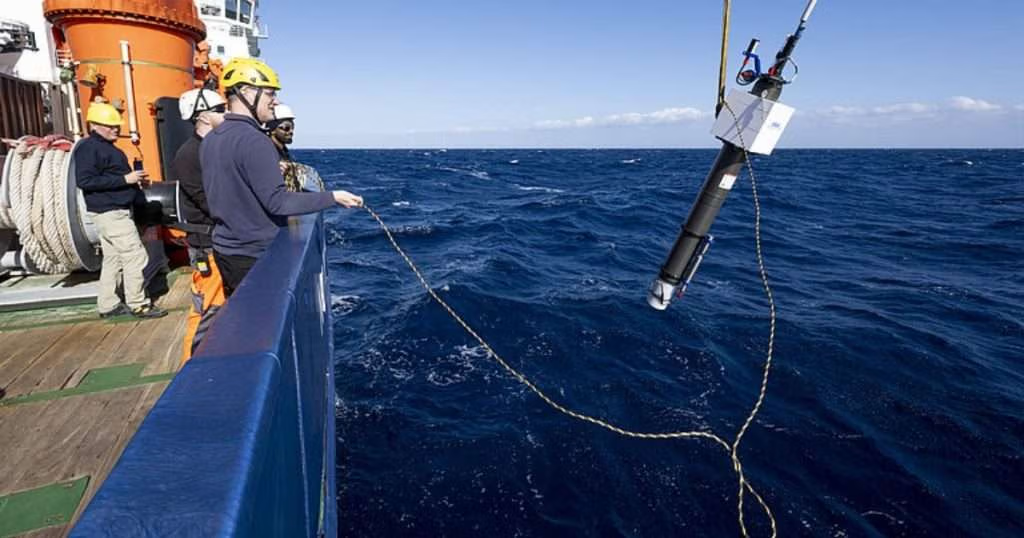
This marks the first comprehensive effort to genetically characterize estuarine sediments through metagenomic techniques, building on methodology adapted from major international initiatives such as the TARA Oceans and Malaspina expeditions, the latter in which AZTI also took part. With this achievement, the Basque Country takes its place on the global map of marine environmental genomics, contributing an important reference for temperate coastal ecosystems.
The study examined 92 sediment samples collected between 2013 and 2020 from twelve Basque estuaries, within the Basque Environmental Monitoring Network. Using metagenomic techniques, the team identified more than 108 million unique genes and reconstructed 471 high- and medium-quality microbial genomes, belonging to bacteria, archaea, eukaryotes, and viruses.
“This genetic catalog allows us to explore how microorganisms support the functioning of estuarine ecosystems and how they respond to human pressures such as pollution or climate change,” explained Ion L. Abad-Recio, a researcher at AZTI and the study’s lead author. “It also opens the door to innovative biotechnological applications, for example, in bioremediation or in the search for genes with industrial potential.”
A Tool to Protect and Restore Coastal Ecosystems
Beyond its scientific value, the catalog represents a strategic resource for environmental management and the sustainable use of coastal ecosystems. The genetic information it contains will make it possible to identify markers linked to pollution or loss of ecological quality, strengthen DNA-based environmental monitoring models, and support conservation, restoration, and coastal management policies.
This resource also provides a solid basis for bioprospecting and biotechnology, facilitating the detection of genes with potential applications in sectors such as blue energy, aquaculture, sustainable agriculture, and the food industry.
Among its most relevant practical applications are the development of DNA-based ecological status indices, port biosecurity and monitoring through early detection of invasive species or pathogens, environmental management of dredging and discharges, blue carbon monitoring in estuaries (MRV: measurement, reporting and verification), and targeted bioremediation.
An Essential Yet Little-Known Ecosystem
Estuaries are transitional zones between marine, river, and terrestrial environments. They recycle nutrients, remove pollutants, and store organic carbon, playing a crucial role in climate regulation. However, their microbial biodiversity remains largely unexplored.
Thanks to the large-scale sequencing of 3.35 terabases of environmental DNA, the catalog offers an unrivalled view of the microscopic life that sustains these habitats. The data reveal key ecological functions and genes that act as indicators of environmental disturbance, paving the way for enhanced biological monitoring and coastal management.
Open Science Serving Knowledge
In keeping with the principles of open science, all materials generated, including sequences, functional and taxonomic annotations, and reconstructed genomes, are publicly available in international repositories (the ENA Sequence Read Archive and BioStudies) so that the global scientific community can reuse them in future research.
“Making this resource publicly available will enable comparisons with other coastal ecosystems around the world and help develop new tools for DNA-based environmental assessment,” notes Anders Lanzén, Senior Investigator at AZTI and IKERBASQUE Research Associate Professor.
An International Collaborative Effort
The project was developed by AZTI, the University of the Basque Country (UPV/EHU), the Rheinland-Pfalz Technische Universität Kaiserslautern-Landau (Germany), the Institute of Marine Sciences (ICM-CSIC) and IKERBASQUE, with support from the Spanish Government, the Deutsche Forschungsgemeinschaft (DFG) and the Horizon Europe program.
This initiative reinforces the Basque Country’s position as a leader in marine ecology and environmental genomics, providing key reference data on estuarine biodiversity and its role in the global carbon cycle.
Scientific Article:
Abad-Recio, I. L., Rubel, V., Filker, S., Garate, L., Stoeck, T., Logares, R., … Lanzén, A. (2025). The Basque Coast Estuarine Sediment Gene Catalog. Scientific Data, 12, Article 1909. https://doi.org/10.1038/s41597-025-06163-6