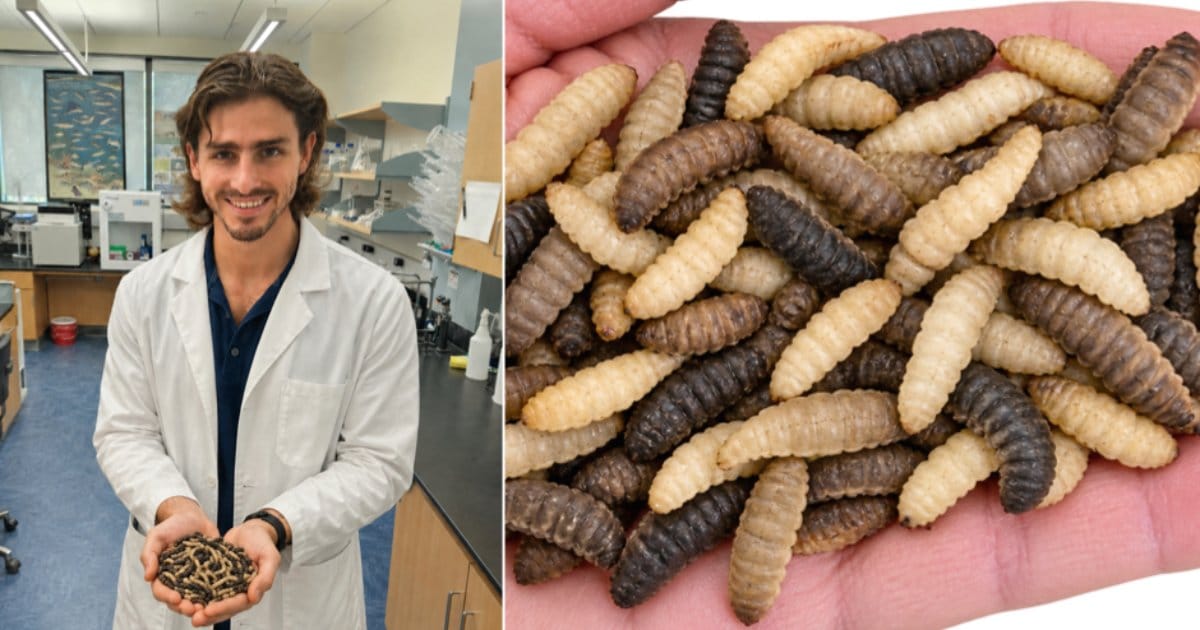
By pairing the region’s surge of sargassum seaweed with an unlikely partner—black soldier flies—the Rosenstiel School’s aquaculture team is exploring how this growing environmental nuisance could be transformed into a more sustainable food future. The effort, supported by over $320,000 in seed grants from Florida Sea Grant and the Hinkley Center for Solid and Hazardous Waste Management, aims to address the increasingly persistent sargassum inundation, which has shifted from a seasonal event to a recurring environmental challenge.
“Our goal is not just to provide a solution to reducing sargassum impacts to our shoreline, but to help redesign Florida’s response to it,” said aquaculture program director Daniel Benetti, a professor in the Department of Marine Biology and Ecology and director of aquaculture at the Rosenstiel School. “Instead of treating it as waste, our scalable system will convert it into valuable products for aquaculture, agriculture, and emerging bio-based industries.”
Their plan is to harness one of nature’s most efficient recyclers: black soldier fly larvae (BSFL)—ubiquitous insects that, in just weeks, can convert locally sourced plant-based waste into valuable products, including a sustainable animal feed ingredient and nutrient-rich fertilizer.
The research grant from the Hinkley Center, in partnership with the University of Miami College of Engineering professor Helena Soto-Gabriele, will evaluate black soldier fly larvae and other biological decomposers such as worms for their ability to remove arsenic from the sargassum so that its recycled products are suitable for use.
From Seaweed Problem to Fish Feed Science
The Rosenstiel School Aquaculture Nutrition and Biotechnology Laboratory led by associate scientist Jorge Suarez has developed an experimental BSFL rearing system that enables monitored bioconversion under controlled conditions—reducing pathogen loads, partitioning contaminants, and limiting the transfer of undesirable elements such as inorganic arsenic to re-enter soils or waterways through uncontrolled decomposition.
This isn’t the team’s first encounter with these flies—in fact, last year Rosenstiel School doctoral student Julio Camperio and colleagues published several peer-reviewed studies demonstrating their value as a functional ingredient in fish feed (1,2,3). The results showed that plant-based substrates produced larvae with significantly higher polyphenol levels, indicating that BSFL can transfer antioxidant compounds from waste into biomass—highlighting their potential as a sustainable aquaculture feed ingredient that enhances overall fish health.
The larvae themselves are processed into a low-carbon alternative to fishmeal sourced from wild fisheries, while what remains is frass—a nutrient-rich organic fertilizer that can improve soil health and reduce reliance on synthetic fertilizers.
Black soldier flies are emerging as a powerful tool for more sustainable food systems, converting organic waste into high-quality protein for animal feed. Rich in essential amino acids, healthy fats, and key micronutrients, they support animal growth and health while offering a fast, scalable production cycle. Compared to traditional feed sources, BSFL require fewer resources, have a lower environmental footprint, and can improve feed conversion in livestock and aquaculture species. This better nutrition extends beyond the farm since healthier-fed fish ultimately benefit people too.
As a result, companies all over the world are fine-tuning the scale-up of BSFL meal production, supplying aquaculture, poultry, and pet food industries with a sustainable alternative to conventional proteins sourced from wild forage fish and krill. This growing sector turns waste into value, helping close nutrient loops while easing pressure on land and marine ecosystems.
A Drifting Marine Refuge
Sargassum is a natural and beneficial part of the Atlantic Ocean ecosystem, providing habitat for marine life while it remains at sea. Sargassum has expanded since 2011 into a vast new region known as the “Great Atlantic Sargassum Belt,” driven by shifting wind patterns. From there, large blooms are transported by ocean currents into the Caribbean, Gulf of Mexico, and tropical South Atlantic.
In the open ocean, free-floating sargassum gathers into intricate, three-dimensional mats that act like drifting oasis in an otherwise structureless seascape. Within their tangled masses, hundreds of marine species find food, shelter, and a place to grow—from tiny invertebrates to commercially important fish like mahi-mahi and tuna.
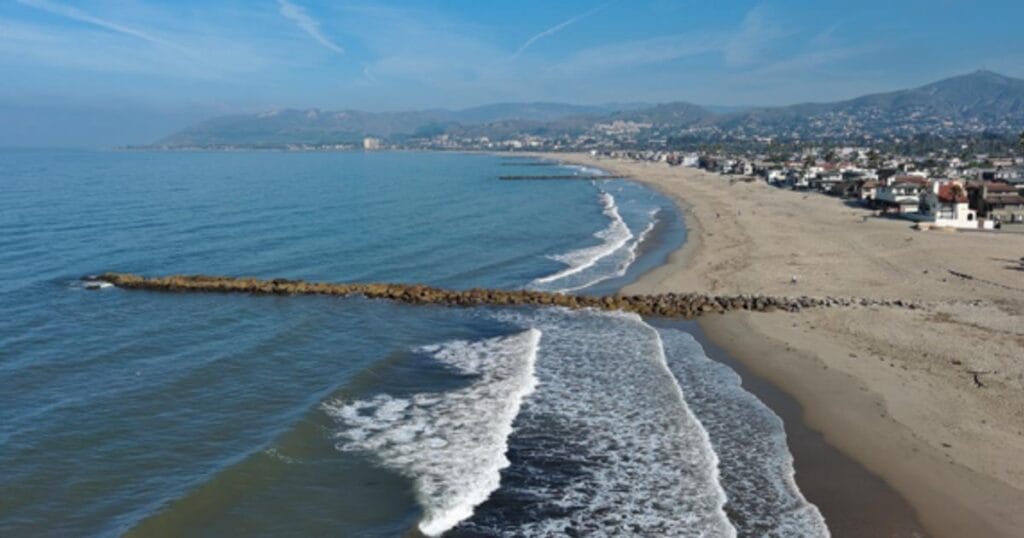
The seaweed’s story changes once it washes ashore. In Florida, winds and currents push it onto beaches where its complex, three-dimensional sea habitat collapses into dense, flattened piles as it dries and decomposes. It accumulates into thick mats that release foul-smelling hydrogen sulfide gas and can harbor organisms that irritate the skin—transforming a valuable marine habitat into a growing coastal nuisance.
These beach accumulations impact Florida’s tourism industry and reduce the enjoyment of South Florida’s coastline, with ripple effects on recreation, local businesses, and beach accessibility.
Scaling a Circular Economy Solution
The team’s efforts are focused on developing a practical, scalable solution that can be deployed beyond Miami to other affected regions, including the wider Caribbean.
To advance this work, the researchers are working to secure additional funding to scale up the design and deployment of modular, containerized BSFL systems capable of processing large volumes of beached sargassum directly within affected coastal communities. These commercially proven, climate-controlled units are designed for rapid deployment, converting significant quantities of biomass while producing consistent outputs for downstream industries.
This project advances a solution that aligns ecology with economy, shifting from disposal costs to value creation—reducing landfill use, lowering emissions, and transforming an environmental liability into a resilient coastal bioeconomy.
“We’re turning an environmental burden into coastal value solution,” said Benetti.
Research publications:
1. https://www.mdpi.com/2071-1050/17/5/1788, 2. https://www.mdpi.com/2076-3921/14/10/1172, 3. https://pubmed.ncbi.nlm.nih.gov/41509727/