This long-standing annual collaboration brings Mote scientists together with two mission-driven organizations, one composed of military veterans and one of science-focused students, each committed to saving coral reefs.
CWVC, a division of Operation No Person Left Behind Outdoors, is an organization dedicated to improving the lives of wounded and injured veterans through rehabilitative, high-adventure, and therapeutic outdoor challenges. Their mission promotes personal growth, camaraderie, and healing, while also contributing to ongoing scientific research on the impacts of traumatic brain injuries, PTSD, and limb loss. Each dive offers participants not only a renewed sense of purpose but also the chance to aid in the restoration of the ocean.
SNI is an organization focused on educating and empowering the next generation of ocean stewards through real-world marine science experiences. By engaging teens in meaningful conservation and stewardship projects, SNI cultivates environmental leadership and deep respect for marine ecosystems.
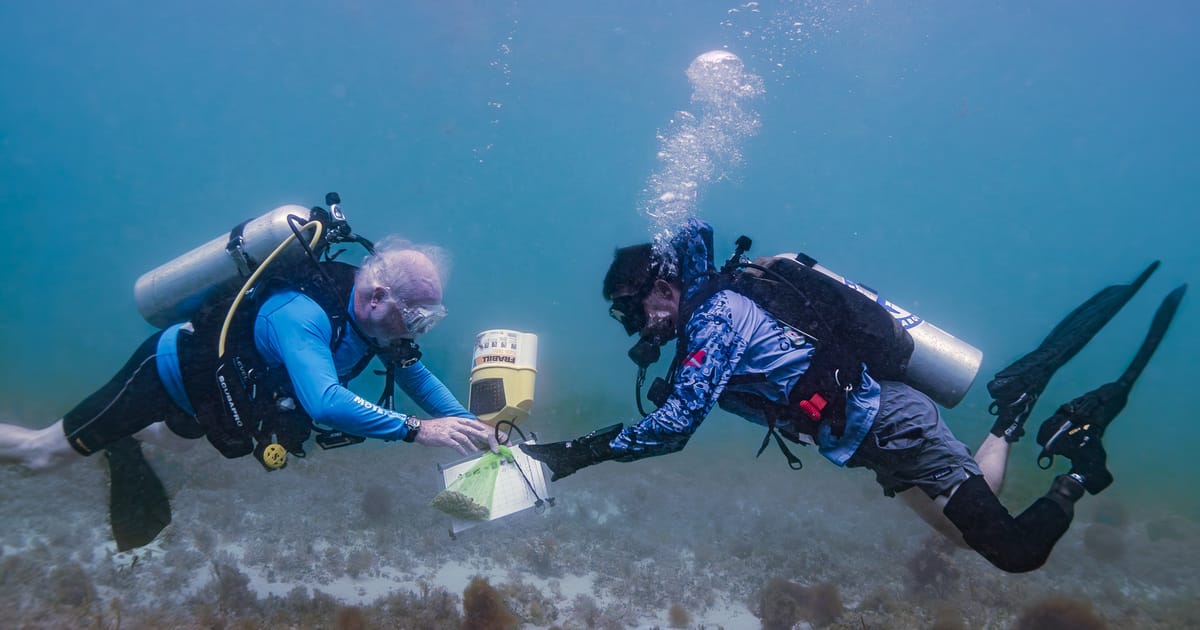
CWVC and SNI worked alongside Mote scientists to install new coral trees and clean existing ones in Mote’s Looe Key offshore coral nursery. A critical part of the cleaning process involves removing algae and obstructive, “fouling” bivalves from the trees, which is essential to reduce competition with critically endangered coral fragments. These combined efforts play a foundational role in sustaining Mote’s science-based coral reef restoration and research pipeline.
Throughout the initiative, Mote, CWVC, and SNI divers worked closely together. The ongoing mentorship between Mote, CWVC, and SNI divers has become a defining part of this event, fostering a meaningful exchange of knowledge, skills, and perspective. Now in its 15th year, this collaboration continues to elevate Mote’s science-based restoration and education efforts, while building a lasting community of ocean stewards. The initiative serves as a reminder of what’s possible when diverse teams unite in the pursuit of coral reef restoration.
“Restoring coral reefs requires both scientific innovation and dedicated hands in the water,” said Dr. Jason Spadaro, Manager of Mote’s Coral Reef Restoration Research Program. “These collaborative efforts support the recovery, health, and resilience of Florida’s Coral Reef while contributing valuable data and maintenance that help maximize restoration success.”
As Mote continues to monitor and manage coral nurseries, partnerships like these remain critical to ensuring the resilience of coral for years to come.