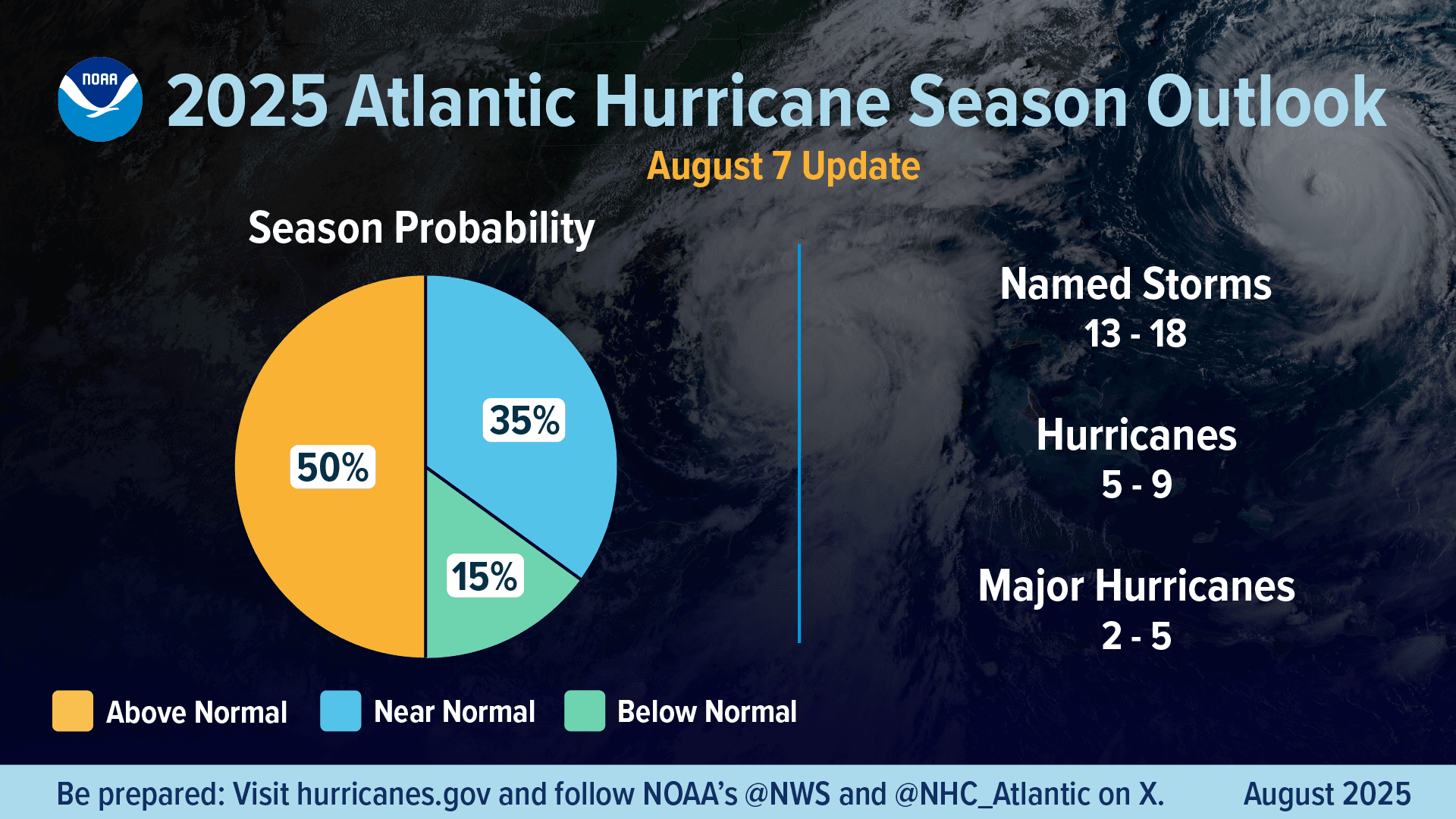
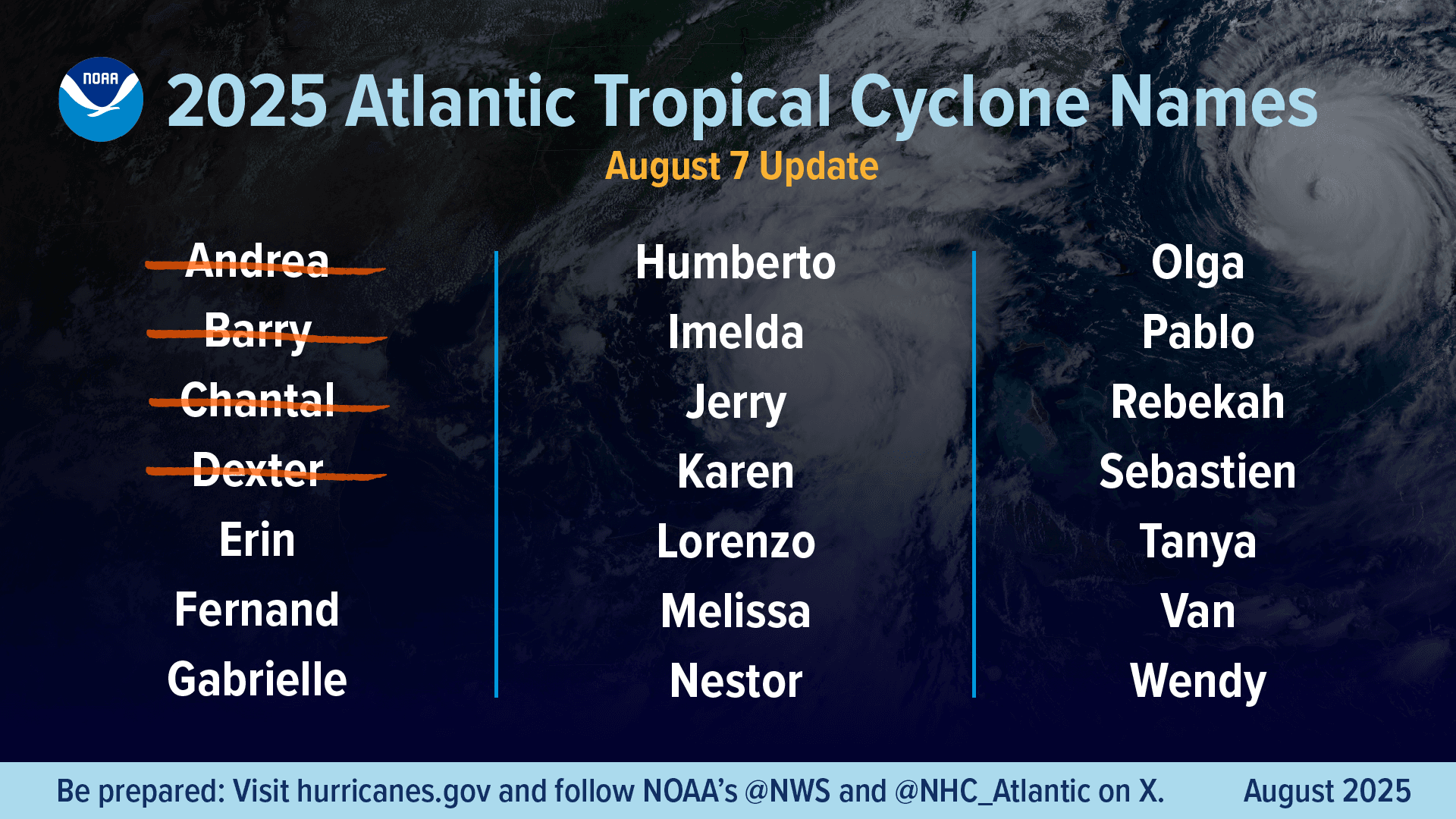
The adjusted ranges are for the entire season from June 1 through November 30 and are inclusive of the four named tropical storms that have already formed. In the Atlantic basin, a typical hurricane season will yield 14 named storms, of which seven become hurricanes and three become major hurricanes.
The likelihood of above-normal activity is 50%, a 35% chance of a near-normal season, and a 15% chance of a below-normal season. This updated prediction is similar to the initial outlook issued in May.
“NOAA stands ready to provide the forecasts and warnings that are vital for safeguarding lives, property, and communities,” said Acting NOAA Administrator Laura Grimm. “As we enter the second half of the season, this updated hurricane outlook serves as a call to action to prepare now, in advance, rather than delay until a warning is issued.”
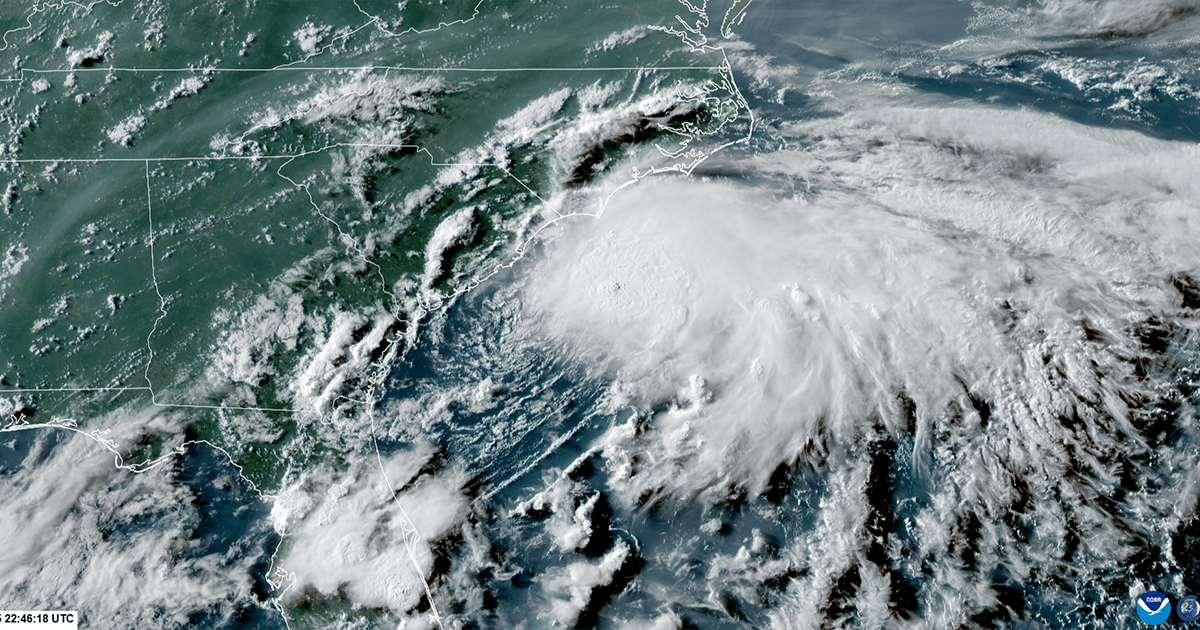
So far, the season has produced four named tropical storms and no hurricanes. Tropical Storm Chantal made the first US landfall of the season and brought high winds and deadly flooding to the Carolinas during the Independence Day holiday weekend.
“No two storms are alike,” said NOAA’s National Weather Service Director Ken Graham. “Every storm presents unique, life-threatening hazards that can impact people in both coastal and inland communities. Have a plan in place, and know the actions you should take before, during, and after the wide range of hazards that the hurricane season can bring.”
Atlantic basin tropical storm activity is expected to be elevated due to a combination of factors, including warmer-than-average sea surface temperatures in the tropical Atlantic Ocean and Caribbean Seas, and an active West African Monsoon. ENSO-neutral conditions are expected to continue, meaning there is neither an El Niño nor La Niña to influence this season’s storm activity.
“Many of the factors we identified ahead of the season are still at play, and conditions are largely tracking along with our May predictions,” said Matt Rosencrans, Lead Hurricane Season Forecaster with NOAA’s National Centers for Environmental Prediction, part of the National Weather Service.
NOAA’s outlook for a below-average Eastern Pacific season—with 12–18 named storms—remains on track, but it did have a rapid start with nine named storms. The Central Pacific outlook remains unchanged, calling for 1–4 named storms.