
At least 160 elkhorn coral genotypes—unique combinations of genetic makeup—were documented alive at their native reefs in this region before the heatwave. As of fall 2023, only 37 remained after the heat event—a loss of 77 percent of genotypic diversity. These were restricted to 16 reefs in the upper Florida Keys, as well as Miami-Dade and Broward Counties.
As of June 2023, scientists weren’t aware of any native, wild elkhorn coral that survived the 2023 heat event south of Key Largo, despite diligent survey efforts by NOAA Fisheries and partners.
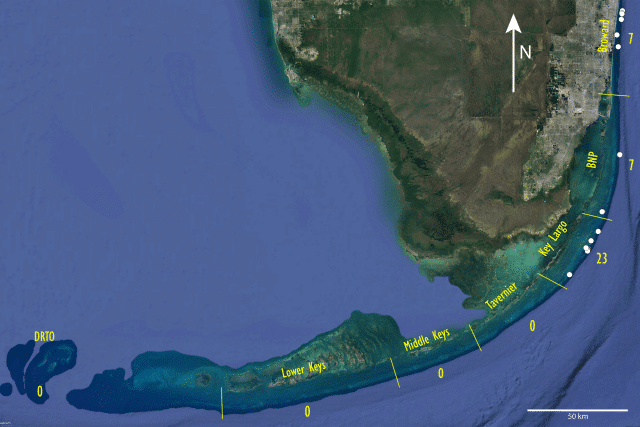
Locations and quantities of the 37 known unique genotypes known to have survived the 2023 bleaching event as of fall 2023. Only a single native, wild elkhorn colony, found at Looe Key in July 2024 (not shown), is known to have survived the 2023 heat event south of Key Largo. (Image credit: NOAA Fisheries)
While these genotypes have been lost in the wild, more than 180 genotypes are represented among elkhorn corals at coral nurseries and gene banks.
By compiling data from many partners, NOAA Fisheries produced a report and a geographic database (which can be found on our eklhorn coral science page) that allows users to visualize where the colonies and genotypes are in relation to one another. These will provide information directly to coral restoration partners about which genotypes remain in the wild.
Why Genotypic Diversity Matters
Most elkhorn coral colonies are created by fragmenting from a larger colony, so multiple colonies can share the exact genetic makeup or “genotype.” Genotypic diversity is important for ensuring coral populations can continue reproducing naturally to sustain their population. In other words, even if there appears to be a healthy coral colony in an area, those corals could all be genetically identical. This means that they’re all equally vulnerable to stressors like heat or disease. This low genotypic diversity limits the population’s ability to adapt to changes in their environment.
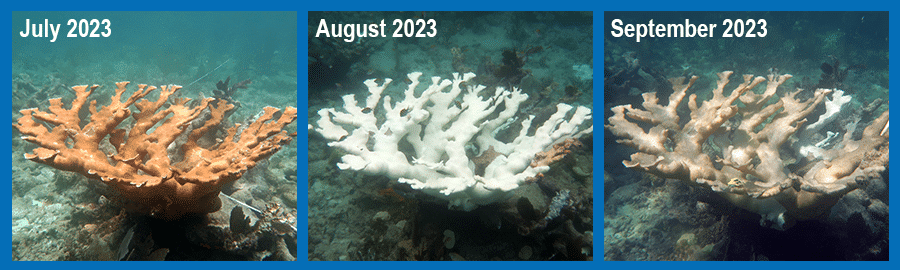
Time series showing an elkhorn coral bleaching and dying in the summer of 2023. The last photo shows the dead skeleton being colonized by filamentous algae. (Image credit: NOAA Fisheries)
Elkhorn colonies on the Florida Reef Tract are now so few and spread out that natural sexual reproduction is unlikely to occur. Scientists and restoration managers are working diligently to find ways to assist reproduction to ensure the population can sustain itself into the future. Producing new genotypes through assisted reproduction of unrelated members of the original, naturally occurring population could result in offspring that may be able to better survive future bleaching events. This will require the use of wild and nursery genotypes. This can help coral restoration partners determine which genotypes are missing from nurseries and genebanks being used in coral restoration efforts.
The Importance of Coral and Coral Reefs
Healthy habitats—such as coral reefs—provide important areas for fish and threatened and endangered species to live. Coral reefs are extremely valuable—in fact, in southeast Florida alone, they are valued at more than $8.5 billion. Florida’s coral reefs provide many benefits:
- Provide powerful shoreline protection
- Provide habitat for diverse marine life
- Support approximately $483 million in annual net benefit to the U.S. economy from tourism and recreation activities
- Support more than $200 million annually for fisheries industries alone
Many factors threaten these important resources, with climate change being the greatest global threat to corals. As ocean temperatures rise, mass coral bleaching and mortality events like what we observed in 2023 are becoming more frequent.
NOAA Fisheries is responsible for recovering protected marine species in danger of extinction under the Endangered Species Act, including the threatened elkhorn coral. Scientific data, such as that provided in this product, helps support NOAA Fisheries in fulfilling this mission.