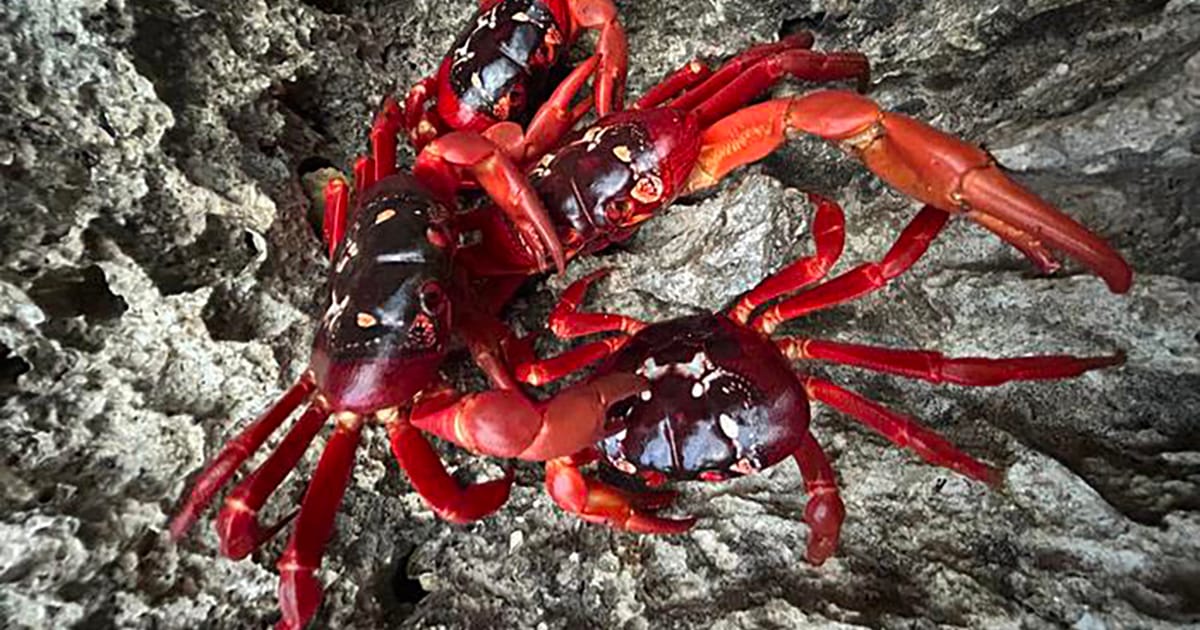
However, little is known about whether and how the species might be impacted under the future environmental conditions created by the changing global climate.
A new study by scientists and graduates at the University of Plymouth has investigated one aspect of how such shifts might affect its earliest development.
Specifically, the research focused on whether lower salinity—caused by future increased rainfall during the tropics’ monsoon season, which would in turn dilute coastal waters—might delay the development of crab embryos.
To understand this, the researchers exposed fertilized late-stage embryos of the crab (Gecarcoidea natalis) to four different levels of seawater salinity.
Over the span of 24 hours, they then used a specially developed and autonomous analysis technology—the LabEmbryoCam—to measure a number of the embryos’ key developmental and physiological traits.
Previous research had shown that environmental drivers such as salinity can impact the timing and duration of developmental events in aquatic early life stages of crustaceans.
However, the results of this new study found that changes in salinity had no impact on the time of first heartbeat, time of hatching, first in-egg embryonic and post-hatch heart rate, or post-hatch movement.
Writing in the study, published in the Journal of Experimental Biology, the researchers say the findings may—on the face of it—appear positive for the red crabs’ future survival.
However, with the study focused on just one environmental stressor—and one period of embryo development—they also highlighted the importance of considering all early life stages when fully characterizing the effects of environmental drivers on crustacean development.
Dr. Lucy Turner, Lecturer in Marine Biology at the University of Plymouth, is the study’s lead author and has carried out a number of studies on the Christmas Island crabs and their behavior.
She said, “Christmas Island crabs are a fascinating species. However, there are big gaps in what we know about them, particularly our knowledge of how they are likely to respond to different environmental stressors. Our study enabled us to look in great detail at how factors such as the heartbeat and movement of individual eggs respond when the environment they are living in changes. The fact that we saw no effect was unexpected, and that could clearly be good news for the species. However, we only looked at one particular stressor—and for a 24-hour period—so it would be good to expand the study significantly to understand what we need to do to protect the crabs in the future.”
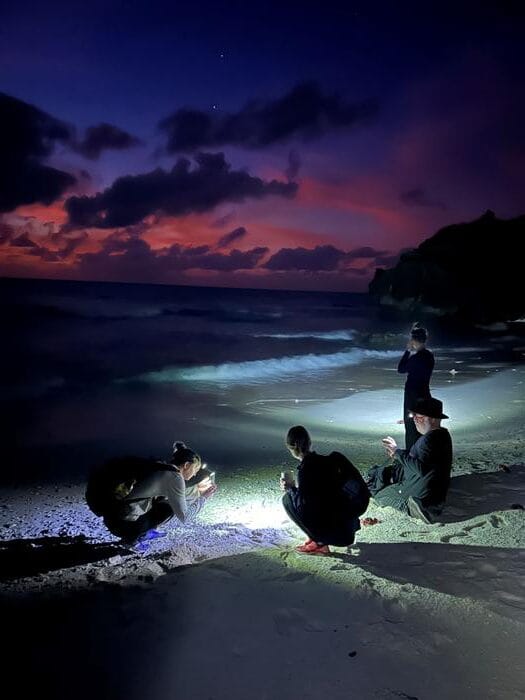
The study was carried out during a field trip to Christmas Island by academics and graduates from the University’s BSc (Hons) Marine Biology program.
They shipped the LabEmbryoCam, technology developed by the EmbryoPhenomics Research Group, to the island and then spent time using it to analyze the embryos’ development.
It enabled the researchers to capture images of individual embryos every 10 seconds over the space of 24 hours, providing them with never-before-seen insights into how the species is likely to respond to lower salinity levels.