The use of AI, developed by Microsoft, makes it possible to efficiently analyze existing sonar images that are collected worldwide, for example, to secure shipping traffic or to explore locations for offshore wind turbines, specifically for ghost nets. WWF Germany is therefore calling for cooperation: Via the online platform ghostnetzero.ai, research institutes, authorities, or offshore wind power companies, for example, can easily donate suitable recordings.
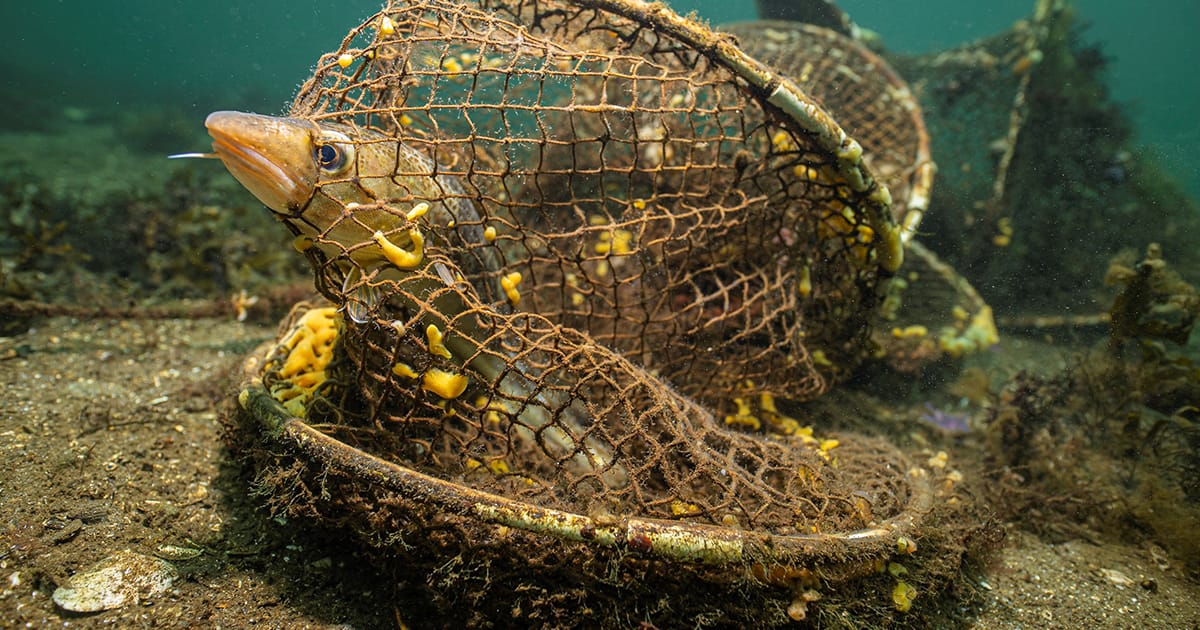
“Ghost nets endanger marine animals and ecosystems and make up a significant proportion of plastic waste in the ocean, but they are invisible under the water surface, and their detection is complex. The combination of sonar search and AI-supported detection enables a quantum leap: the seabed is mapped all over the world, and there is a huge amount of data. If we can specifically check existing image data from heavily fished marine zones, this is a real game-changer in the search for ghost nets. We hope that research institutes, authorities, and companies will take part in the collaboration,” says Gabriele Dederer, research diver and Project Manager Ghost Nets at WWF Germany. AI support also enables WWF to extend its own search to larger sea areas.
The accuracy of the AI is already 90 percent. The environmentalists check the marked areas for validation with a trained eye. Depending on the nature of the seabed, it is often difficult to tell whether a suspicious structure is a sanded-in net or a cable. The AI is currently trained to detect these subtle differences in sonar images from different systems reliably. This will make it possible to evaluate existing data sets in a targeted manner.
The online platform was developed with the support of Accenture and the AI used for it with Microsoft AI for Good Lab.
The co-developed platform replaces tedious manual searching with a scaled process that analyzes data at unprecedented speed,” said Thomas Knüwer, Chief Creative Officer at Accenture Song ASG. A web platform, branding, and targeted communications turn the technology solution into a long-term initiative. “To address the partners in a targeted way, we rely on clear design, intuitive UX, and consistent brand management.”
“We are excited to work with WWF Germany and Accenture on this project to help address ocean plastic pollution and protect marine ecosystems,” said Juan Lavista Ferres, Corporate Vice President and Chief Data Scientist of the AI for Good Lab at Microsoft. “The Microsoft AI for Good Lab developed a model that allows GhostNetZero to analyze sonar data to identify and remove ghost nets with the accuracy and efficiency that is only possible with AI.”

Lost fishing gear makes up around 30 percent of marine plastic waste, decomposing into smaller pieces and fibers over centuries and exacerbating microplastic pollution in the oceans. The ownerless nets can fish endlessly, making them deadly traps for fish, seabirds, turtles, and marine mammals. Every year, 20 percent of all fishing gear in the world’s oceans is lost. So far, WWF Germany has manually sifted through images captured by a side-scan sonar and recovered a total of 26 tons of nets from the Baltic Sea.