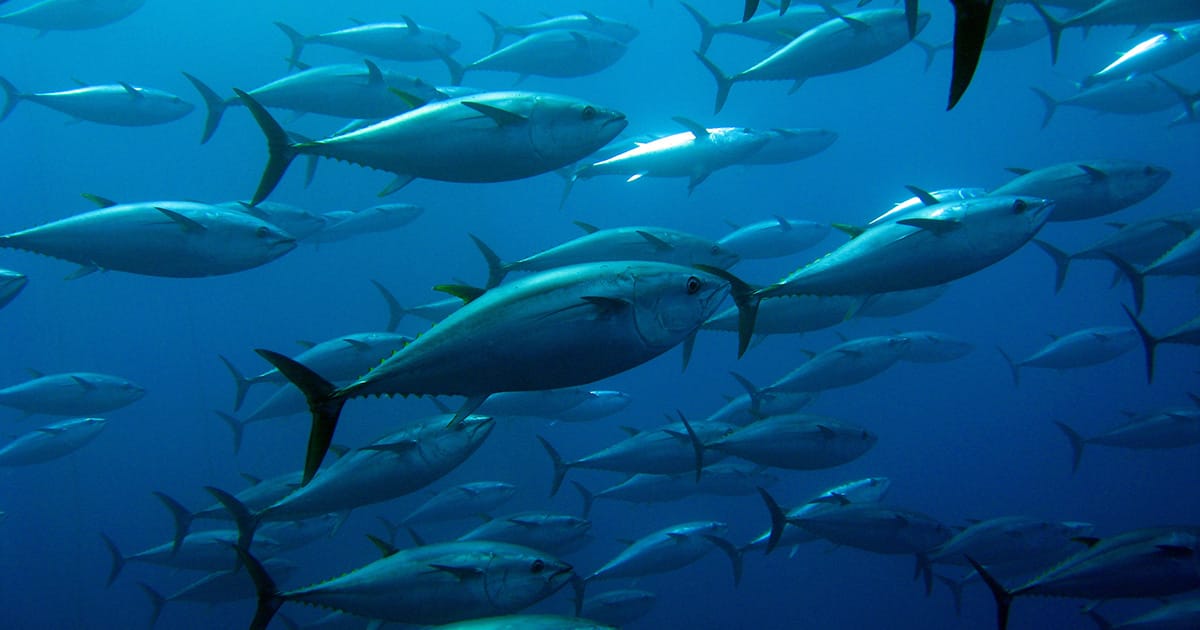
Growing momentum from policymakers, industry leaders, and public opinion underscores the urgency of addressing tuna welfare. In 2024, an EU Parliament Resolution called for animal welfare guidance in the next Common Fisheries Policy, while key industry actors like Blueyou and the FIA PNG are leading the way, having already adopted tuna welfare policies. With 91% of Europeans supporting fish welfare on par with other farmed animals, tuna welfare policies can help companies improve transparency and meet evolving public demands. Tuna welfare is not just a moral imperative; it’s a strategic priority for sustainable success.
While conversations about aquatic animal welfare are becoming more commonplace in the overall industry, they have not yet been prioritized in the tuna fisheries industry. Instead, the focus has been more on preserving product quality. Research shows, though, that these issues go hand-in-hand, as product quality is linked to animal welfare during capture, retrieval, handling, and slaughter. It is important for companies to act now in order to stay in line with supply chain policy changes incorporating aquatic animal welfare.
“As a leading international hub for aquatic animal welfare, we are committed to helping businesses transition smoothly toward meaningful aquatic welfare commitments. Tuna plays a crucial role both economically and ecologically, making this sector uniquely positioned to lead the way in responsible practices. This guide is designed to spark important conversations, and we stand ready to collaborate with companies on tailored action plans to advance tuna welfare commitments,” said Christine Xu, Head of Fisheries Welfare at ALI.