Mercury contamination in seafood is a global health concern. Mercury (Hg) originates both from natural sources like volcanoes and forest fires and from human activities such as coal burning, gold mining, and industrial waste incineration. Bacteria convert it into toxic methylmercury, which is biomagnified within food webs. Because tuna are top predators, eating many smaller contaminated fish, mercury accumulates in their bodies over time.
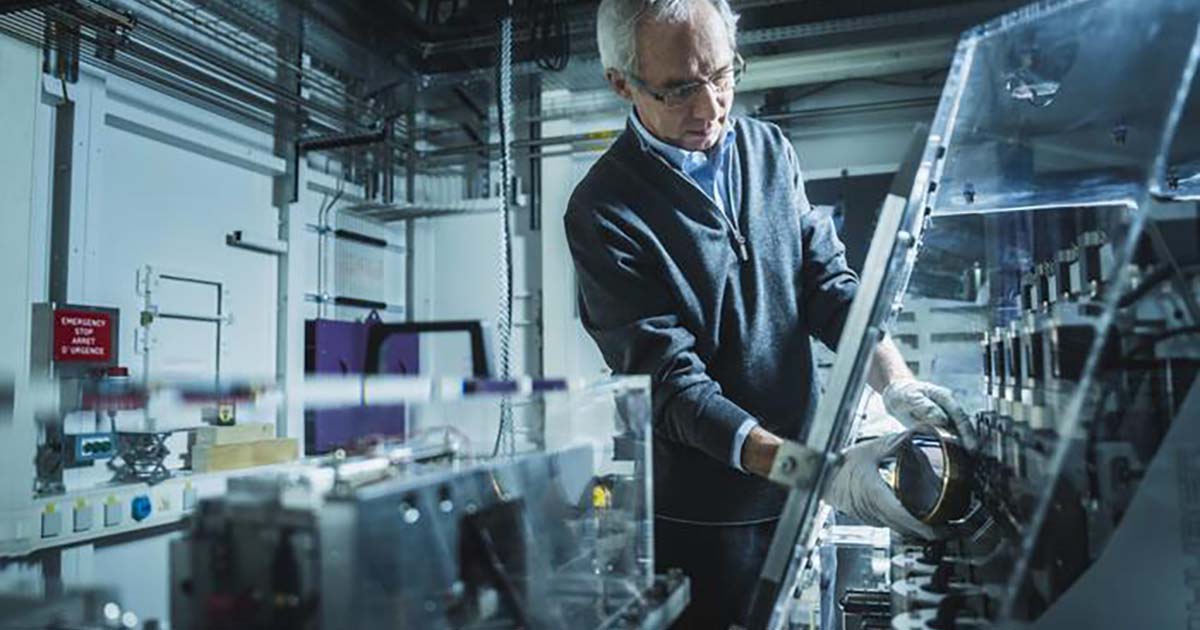
However, not all mercury is equally toxic; its chemical form makes a big difference. A study led by Alain Manceau, researcher emeritus CNRS/ENS Lyon, scientist at the ESRF, who has spent years studying how animals detoxify mercury, recommends how the mercury content should be measured. “When evaluating the level of toxicity, we should do so by measuring the concentration of methylmercury, which can be done routinely today, instead of total mercury,” he explained. “Otherwise, we include forms of mercury that are sometimes present in fish but are harmless to the human body.”
Bluefin Tuna Detoxify the Toxic Form of Methylmercury
Using the ESRF’s intense X-ray beams, the team tracked how mercury is processed inside Atlantic Bluefin tuna. They discovered that, unlike toothed whales and apex seabirds, where detoxification occurs mainly in the liver, Atlantic Bluefin tuna rely primarily on the spleen to break down methylmercury. The process of detoxification takes place due to the interaction between selenium—an essential nutrient found in seawater—and mercury, as selenium binds mercury into stable mercury–selenium complexes, which are far less toxic, if at all. High-trophic marine predators detoxify methylmercury through a series of reactions involving reduced selenium in the form of a prominent selenoprotein (Selenoprotein P).
To obtain these results, Alain Manceau and Pieter Glatzel, an ESRF scientist, used a synchrotron technique called high-energy-resolution X-ray absorption spectroscopy. The team found that part of mercury in edible muscle of Atlantic Bluefin tuna occurs as a tetraselenolate complex (Hg(Sec)4), which is arguably not toxic, since this complex transforms into inert mercury selenide in the spleen. “The reason why the muscle has no mercury selenide is simply because the mercury concentration is not that high in this tissue to begin with,” added Manceau.
Different Tuna Species, Different Concentrations
The Atlantic Bluefin tuna investigated were caught along the Norwegian coast. “Samples of such large individuals, which can weigh up to 300 kg, are difficult to get, but being high-trophic predators, they make key model organisms to study,” explained Martin Wiech, scientist from the Institute of Marine Research.
The Atlantic Bluefin tuna is a high-trophic predator, like Bigeye tuna, so the results of this research cannot be extended to lower-trophic tuna species, which contain much less mercury. The smaller tuna species, such as albacore and skipjack, typically found in tuna cans, are much less contaminated.
This study highlights the need for more precise testing of seafood, distinguishing between toxic methylmercury and less reactive mercury–selenium complexes, to provide consumers with better-informed food safety recommendations. “One generally assumes that all mercury in fish is methylated,” concluded Manceau. “While this is usually the case, our results show that up to a quarter of the mercury present in the edible muscle of bluefin tuna is in less harmful forms. This proportion reaches 90% in marlin, also known as makaire. Health risks, therefore, depend not only on the total amount of mercury, but also on its chemical form.”