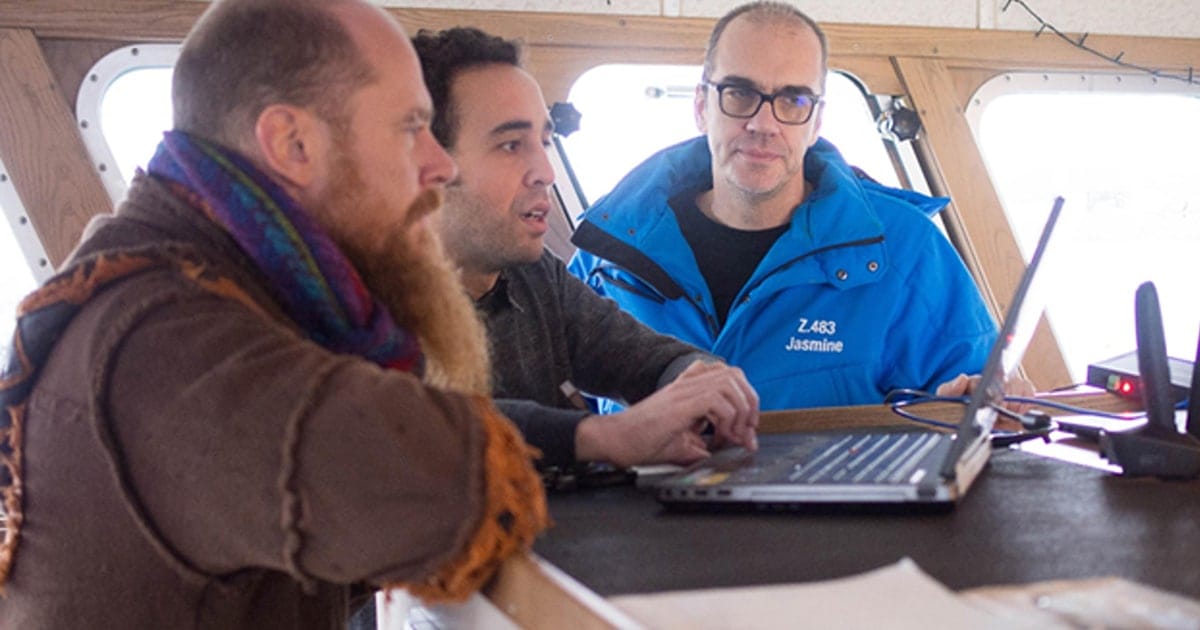
Current Data Collection on Fishing Vessels
Traditionally, fishing activities have relied on manual record-keeping using paper logs to track catches, fish box contents, and trip profitability. More recently, electronic onboard equipment has been introduced to collect valuable data, like location tracking, towing force monitoring, fuel consumption, and catch registration with electronic scales. However, whether recorded manually or electronically, this data is not useful to fishers or shipowners unless collected, stored, and, most importantly, analyzed.
Automating Data Collection
VISTools automates data collection and integrates it with economic parameters such as fish and fuel prices. This approach provides fishers with new insights into their economic performance, meaning they can enhance vessel efficiency and reduce environmental impact.
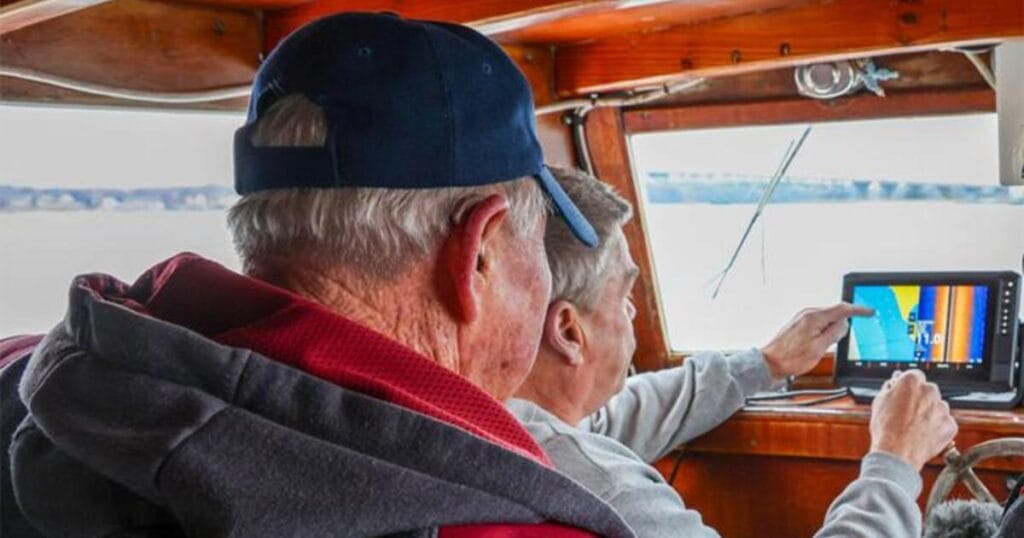
As Dany Vlietinck, a participating fisher, explains: “With VISTools, we can constantly see what we are doing…and if adjustments need to be made [or] we need to cut down on fuel consumption. It helps us get smarter and we hope the system further grows to incorporate more aspects of ‘smart fishing’.”
The system includes electronic fish hold plans to log catch details and Geographic Information Systems tools for mapping and data analysis, enabling precise tracking of catch yields per trip and fishing ground.
The system can be expanded with additional sensors, including integrations with weather stations and sensors for conductivity, temperature, depth, and turbidity. Future plans include automatic species detection through AI image recognition and environmental DNA sensors to monitor biodiversity and ecosystem health and detect fish species and quantities.
EMFF Support for the Automation of Data Collection
European financial support enabled the creation of a proof-of-concept, demonstrating that with up-to-date digital information, fishers could reduce fuel consumption and CO₂ emissions. The funding also facilitated the development of hardware solutions and the installation of device sensors and cameras on five vessels for testing a scaled-up version.
VISTools technology has now reached commercial scale, is used in 62% of Belgium’s fishing fleet, and has been sold in the Netherlands. Since the completion of the VISTools project, several projects, such as the OptiFish and ILIAD projects, have been launched that also focus on digital transformation in EU fisheries.
The Impact of VISTools Technology
The technology developed by VISTools represents a significant leap toward digital transformation in the fishing industry. As explained by Lancelot Blondeel from the Flanders Research Institute for Agriculture, Fisheries and Food, “The data collected from VISTools offers detailed insights into fishing vessels’ activities. By processing this data in real-time, business intelligence tools can help fishers make more informed decisions that improve their business and lead to better sustainability.”
The collaborative approach, gradual scaling, and user-centric development have been key to VISTools’ success, setting a robust foundation for further innovation and expansion in precision fishing.