In a study published in the scientific journal Frontiers in Ecology and the Environment, the team reports that the updated targets address the inherent complexity of biodiversity well, thus reducing the risk of missing critical changes in marine biodiversity.
A major challenge in the implementation of conservation measures is that setting a key target like the 1.5-degree limit for climate protection is not possible when it comes to protecting biodiversity. “Biodiversity occurs at different levels, from genes to species to ecosystems,” explained Dajka, the lead author of the study. According to experts, one of the reasons why the Aichi Targets adopted by the parties to the UN Convention on Biological Diversity in 2010 failed was that, in many cases, progress in achieving them was not measurable. With the adoption of the GBF in 2022, the international community agreed on a new strategy.
In the view of the international team of researchers led by Dajka and Eilrich, the Montreal-Kunming framework establishes robust, science-based targets that address all the different levels of marine biodiversity: “Our analysis shows that global policy is catching up with science in recognizing the complexity of marine biodiversity,” Dajka explained. The scientists write that the framework provides national governments with a solid roadmap for the implementation of the targets.
These findings are the result of a systematic review of the relevant literature, including marine biodiversity research from the period between 2010 and 2020 and various political agreements. The goal was to determine which indicators scientists and policymakers use to track changes in marine biodiversity.
According to the study, both scientific research and policy generally take six classes of variables, known among scientists as Essential Biodiversity Variables (EBVs), as their reference. These include spatial species distribution, genetic diversity, physical species traits, and ecosystem structure. Together, the six classes provide a comprehensive overview of all facets of biodiversity. “If policymakers are guided by this framework, they can ensure that none of the biodiversity levels are overlooked,” said Dajka.
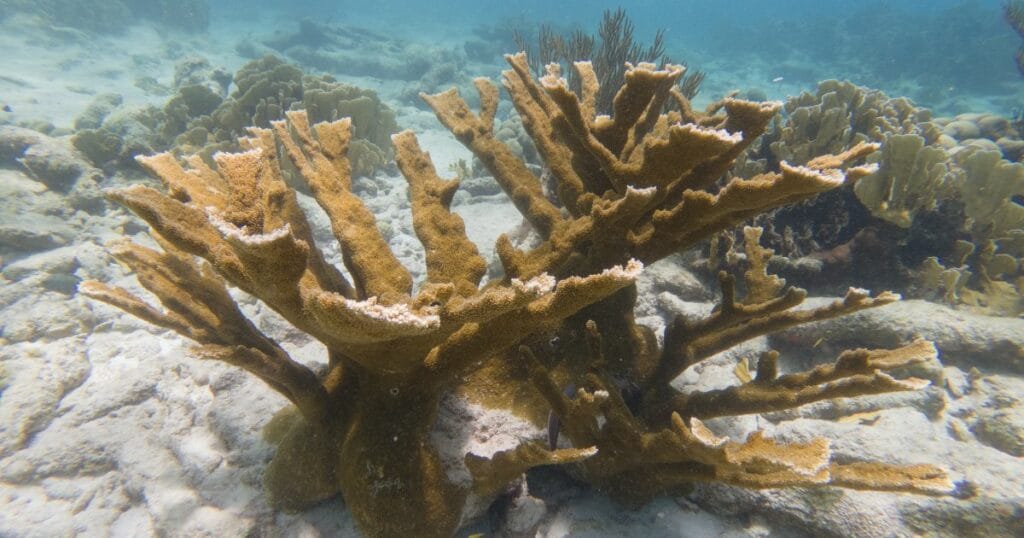
The authors of the study also found that secondary classes, such as ecosystem structure or ecosystem function, have gained importance, both in the Kunming-Montreal framework and in other global biodiversity frameworks. However, they point out that certain variables in these classes, such as the percentage of protected area, are of limited use as indicators of a healthy ecosystem. “If, for example, a large area of a coral reef is protected, this is a good thing. But if only one coral species lives there, the ecosystem is still very fragile,” Dajka explains. The scientists caution against overemphasizing secondary variables at the expense of foundational ones such as the number of species or genetic diversity within a species. The latter form the basis of ecosystems and are still crucial for tracking real progress and initiating conservation measures, they stress.
The researchers also see their study as a tool to support the arguments of the political institutions tasked with implementing the framework at the national level. The skepticism expressed from various voices regarding the framework’s goals is partly unjustified, Dajka explained: “The targets are good. Our recommendation to governments is to now focus on translating them into appropriate national-level indicators and on implementing science-based measures.”