
DDTs are known as endocrine disruptors, with potential adverse effects on reproduction and immunity. They can bind to a protein called estrogen receptor α (ERα), disrupting hormone balance and potentially causing reproductive and immune dysfunction.
Traditionally, chemical toxicity assessments have been conducted using laboratory animals like mice. However, experiments using large wild animals like killer whales raise ethical and technical challenges. Therefore, New Approach Methodologies (NAMs) have gained attention as alternatives to animal testing. NAMs aim to assess chemical toxicity without relying on animal experiments by utilizing in vitro experiments and computer simulations.
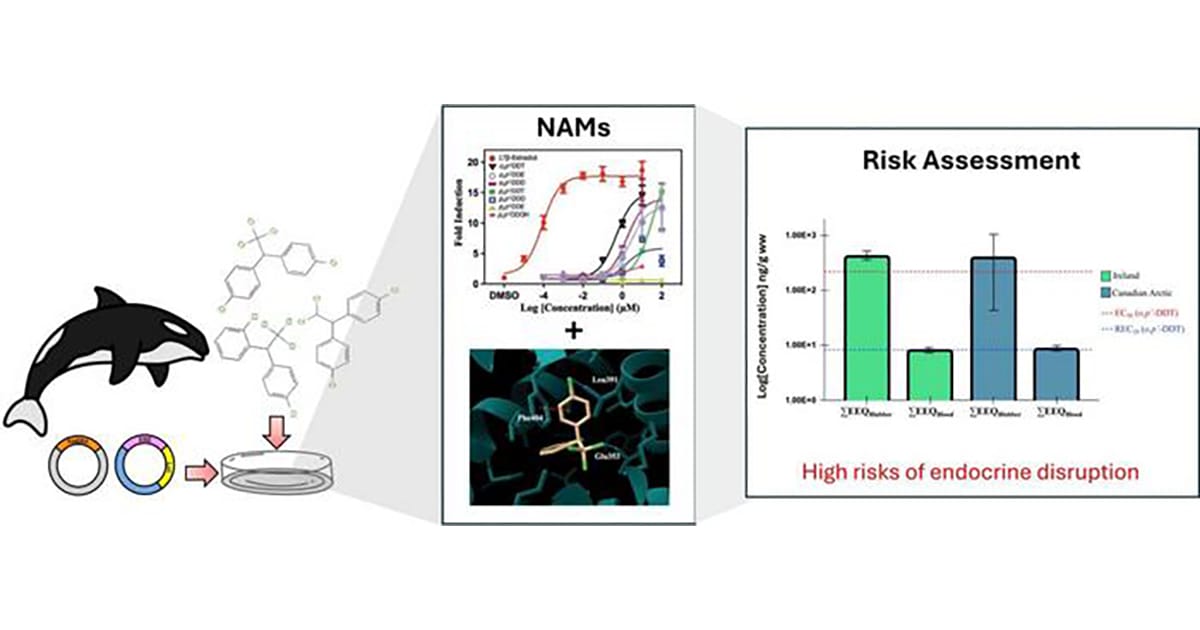
This study employed NAMs to evaluate the effects of DDTs on killer whale ERα (kwERα). Specifically, we established an experimental system using cultured cells expressing kwERα to examine whether DDTs activate kwERα. Additionally, we used molecular docking simulations to analyze how DDTs bind to kwERα on a computer.
The results revealed that DDTs activate kwERα, exhibiting estrogen-like effects. Notably, a DDT isomer called o,p’-DDT showed strong activation potential towards kwERα. Moreover, the potency of DDTs could be simulated using molecular docking simulations. Comparing DDT concentrations in killer whales from Ireland and the Canadian Arctic with the concentrations that affected kwERα in vitro suggested that DDT levels in killer whales could disrupt estrogenic activity.
This study demonstrated the feasibility of using NAMs to assess chemical toxicity and risk without conducting animal experiments on killer whales. Further research is expected to elucidate the detailed molecular mechanisms of ERα activation and apply these methods to other chemicals.