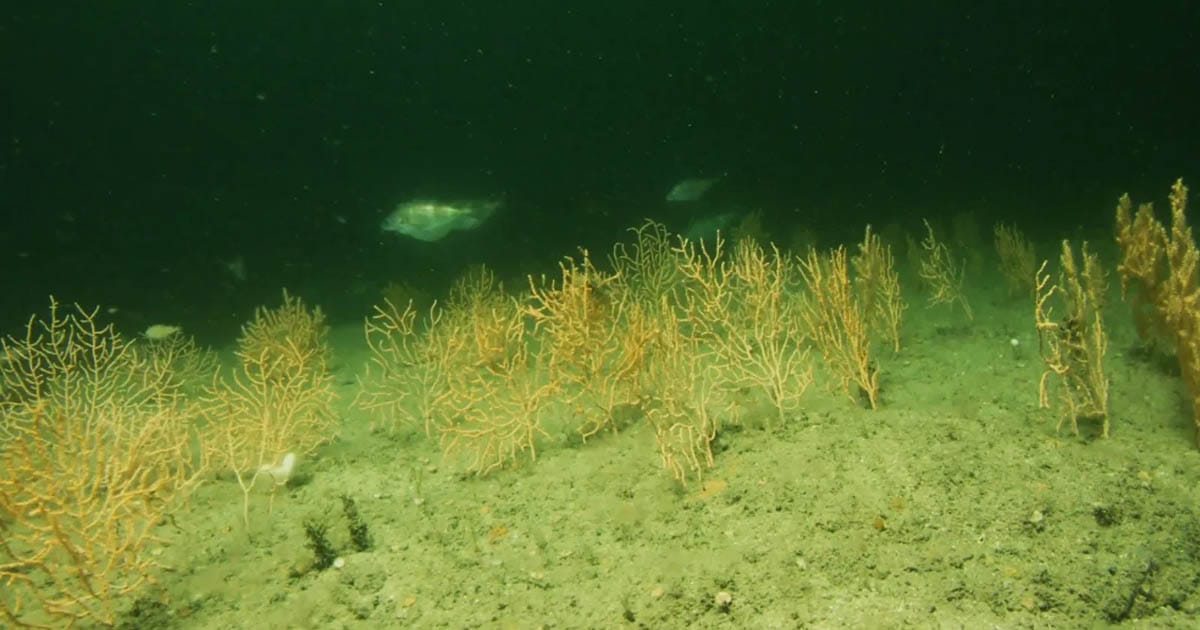
In an extraordinary moment of chance during the production of Ocean with David Attenborough, a vibrant and exceptionally well-preserved pink sea fan reef has been discovered off the southwest coast of England. The find, described as a “little sanctuary”, showcases a flourishing underwater habitat that has remained hidden until now.
This vibrant, undisturbed habitat, teeming with marine life, was uncovered by researchers from the Marine Biological Association (MBA) and filmmakers and underscores both the resilience of the ocean and the urgent need to protect its hidden treasures.
The find was made during a collaborative research project between Dr. Bryce Stewart, Senior Research Fellow at the MBA and Associate Fellow at the University of Plymouth, and filmmakers from Silverback Films and Open Planet Studios. After initially discovering the reef by chance with drop down cameras, divers descended onto the reef to film it in high definition. Through a further collaboration with the underwater robotics company ‘PicSea’, the reef was then mapped in 3-D using autonomous underwater vehicles (AUVs).
“This pink sea fan reef is a stunning and significant find, a little sanctuary,” said Dr. Stewart. “These delicate corals grow incredibly slowly and support a rich variety of marine life. Discovering this habitat intact gives us both an urgent reason and a rare opportunity to act now to protect it for future generations.”
Image2. The previously undiscovered sea fan reef is teeming with life. (Image credit: Silverback Films and Open Planet Studios)
A Stunning Discovery Born of Science and Storytelling
This exceptional habitat was discovered while the team was preparing to film scenes of the seafloor for Ocean. Although much of the area they carefully surveyed before filming took place had relatively little visible life, they suddenly encountered something altogether different: an incredible marine ecosystem that appeared almost untouched by human activity. Sea fans grow only a matter of millimeters every year, and their size indicates that they have been established for a significant period of time.
“We were shocked,” said Olly Scholey, Director at Silverback Films. “What we saw on the seabed was a carpet of pink sea fans—an oasis of life hidden beneath the waves. Only by surveying the area did we discover this incredible habitat that is vulnerable to destruction. If one survey can uncover such a gem, who knows how many more treasures are hidden on the seabed.”
“When I heard the news about the sea fan site, I was very excited,” said Andrew Durrant, Founder of PicSea. “We were already honored to be part of this project, and having the opportunity to capture an undiscovered site like this with our robots was next level. Our georeferenced 3D reconstructions will give the team at MBA a powerful tool for assessment and protection.”
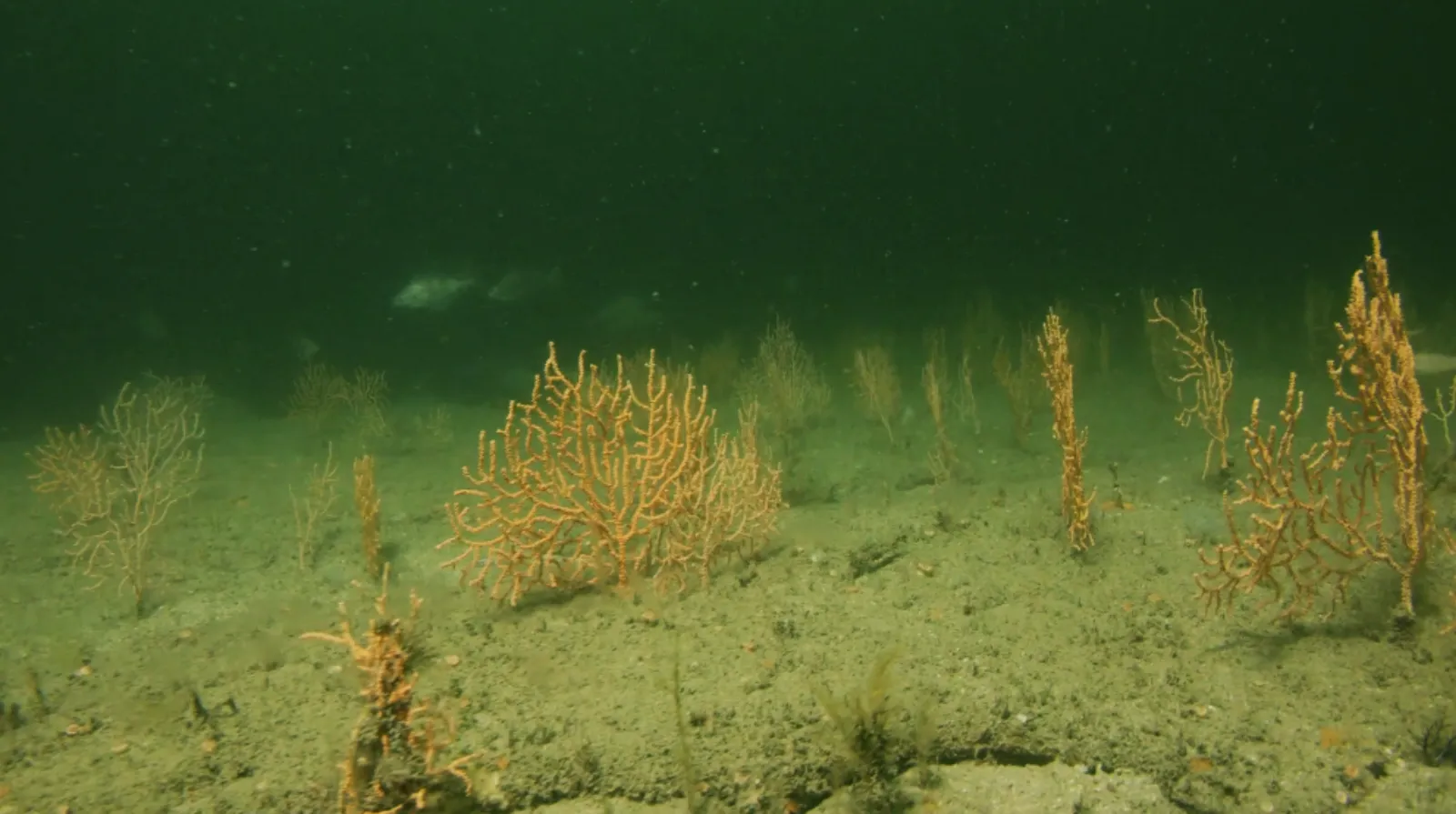
The reef, located on difficult-to-trawl terrain, may have escaped the impact of fishing thanks to its unique topography. However, its survival is far from assured.
A Critical Moment for Marine Protection
The timing of the discovery adds urgency to global conversations about ocean conservation. Coming so soon after the United Nations Ocean Conference recently held in Nice, the revelation of such a rare and pristine marine habitat bolsters the case for stronger protections in UK waters and beyond.
“There is hope—if we properly protect marine ecosystems and manage human activities sustainably, then the ocean can bounce back at an astonishing rate,” added Dr. Stewart. “The evidence and insights provided by the MBA, alongside our efforts to improve fisheries management and marine conservation, help to inform better practices and influence policies that protect our oceans.”
Efforts led by Dr. Stewart are already underway to secure formal protection for the site.
The Role of the Marine Biological Association
This discovery is the latest example of the MBA’s leadership in ocean science, discovery, and evidence that supports our understanding and conservation. For 140 years, the MBA has been at the forefront of marine research, combining rigorous fieldwork, technological innovation, and independent evidence provision that advances our understanding and protection of the marine environment.
“The MBA is instrumental in informing better ocean management,” said Dr. Stewart. “This discovery, like much of our research, shows the power of science to drive conservation and influence meaningful policy.”
Working with the production team behind Ocean with David Attenborough, who are leaders in underwater cinematography, the MBA proudly supported them through research, scientific advice, and technical support for some of the filming. The MBA is now excited to build on this work together in the future to help people understand the ocean and how science, story-telling and individual action can help it recover.
“This work revealed a new area that would be particularly susceptible to scallop edging and allowed us to provide evidence towards its protection,” said Dr. Stewart.
Regeneration is Possible
The film underscores a hopeful message: that marine ecosystems, when protected, can recover, often more quickly than anticipated. Dr. Stewart’s decades-long work with the Community of Arran Seabed Trust (COAST) in Scotland offers proof. COAST’s campaigns resulted in Scotland’s only No Take Zone and a larger Marine Protected Area off the south of the Isle of Arran, where research led by Dr. Stewart has documented a remarkable recovery of marine life, including commercially fished species such as scallops and lobsters.
“Ocean with David Attenborough shows that when we stop damaging the ocean, it recovers, and often faster than we expected,” said Dr. Stewart. “But we need urgent action. Fishing with the wrong gear in the wrong place can be highly damaging, and discoveries like this reef highlight what’s still at stake.”
A vibrant sea fan reef has been discovered off the southwest coast of England. (Video credit: Silverback Films and Open Planet Studios)