Since the 19th century, nitrous oxide concentrations in the atmosphere have been steadily increasing, mainly due to human activities, such as the use of fossil fuels and the intensification of agriculture. For example, fertilizer contains a lot of nitrogen, which then ends up in rivers, lakes, and oceans in the form of nitrate. There, bacteria convert the nitrogenous substances into food and energy. This process also produces nitrous oxide, which then escapes into the atmosphere.
Focus on Hypoxic Zones
The processes involved in the production of nitrous oxide in the ocean are complex and only partially understood so far. However, it is known that a particularly high amount of it is released in hypoxic, or low-oxygen, water. This is home to special microbial communities that convert nitrate into nitrous oxide to generate energy. Frey has therefore taken a closer look at the processes that take place in these zones.
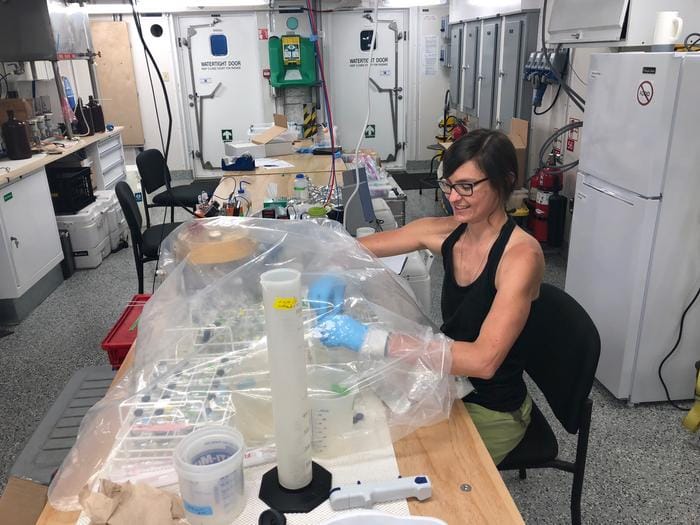
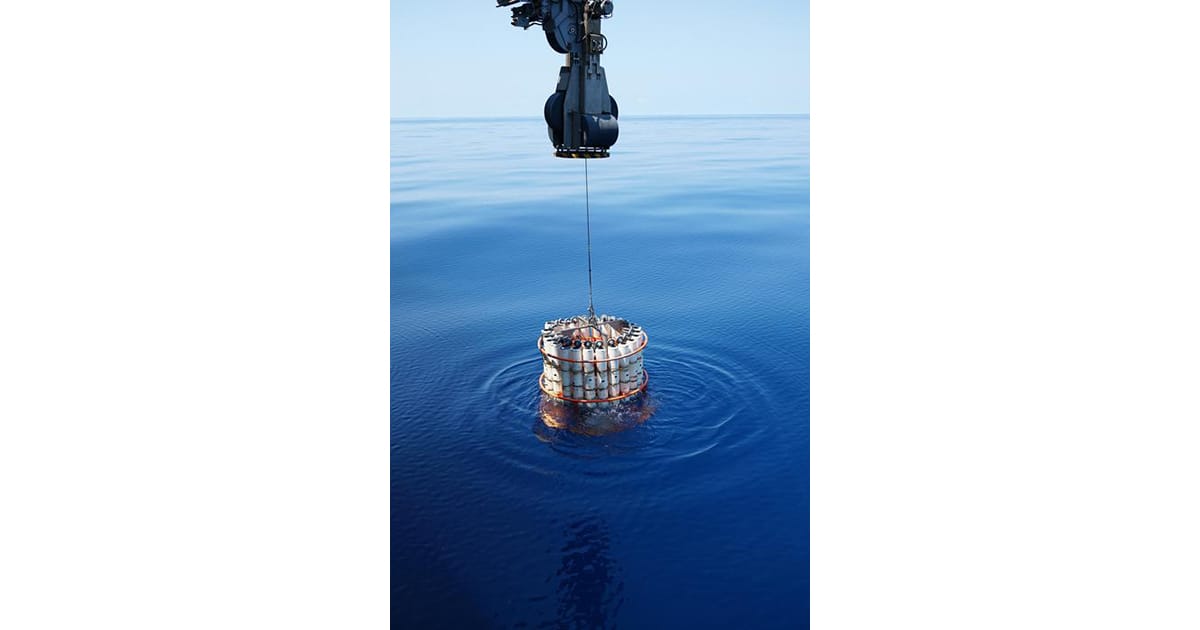
The researcher spent six weeks on a research vessel along the coasts of California and Mexico. This is where the largest hypoxic areas of the Pacific are located. She collected hundreds of water samples at different depths and carried out some analyses and experiments while still on board. “Since time on the boat is so precious, we practically worked day and night,” she recalled. In order to preserve the samples in their original condition, they had to be examined without oxygen and in cold rooms—all while the vessel was moving through tropical waters.
Bacterial Metabolism Works Differently Than Expected
The investigations yielded several surprising results. Until now, it had been assumed that the conversion of nitrate into nitrous oxide only worked at extremely low oxygen concentrations. In her water samples, however, Frey was able to provide proof that the microbes can also do this at much higher oxygen concentrations—namely, when a lot of organic material is present in the hypoxic zones in the form of small dead algae, for example.
Another unexpected finding: the bacteria always preferred to go through the entire multi-stage metabolic pathway from nitrate to nitrous oxide. Research had previously thought that the bacteria would switch to a shorter pathway if an intermediate product required for this was provided in the water. The assumption was that the shortcut required less energy. The experiments showed that this is not true.
Frey used the new findings to close gaps in a model for the ecosystem in hypoxic zones. This now takes into account, for example, that the presence of organic material increases the oxygen tolerance of the bacteria. This also increases the number of regions in which nitrous oxide production is possible.
“When it comes to climate predictions, it is crucial to understand what happens in these peripheral zones,” said Frey, especially as people continue to add more and more nitrogen to water bodies. “What happens in the oceans is relevant to us, because they cover two-thirds of our planet.”
To read the study, visit: https://www.nature.com/articles/s41467-025-63989-9