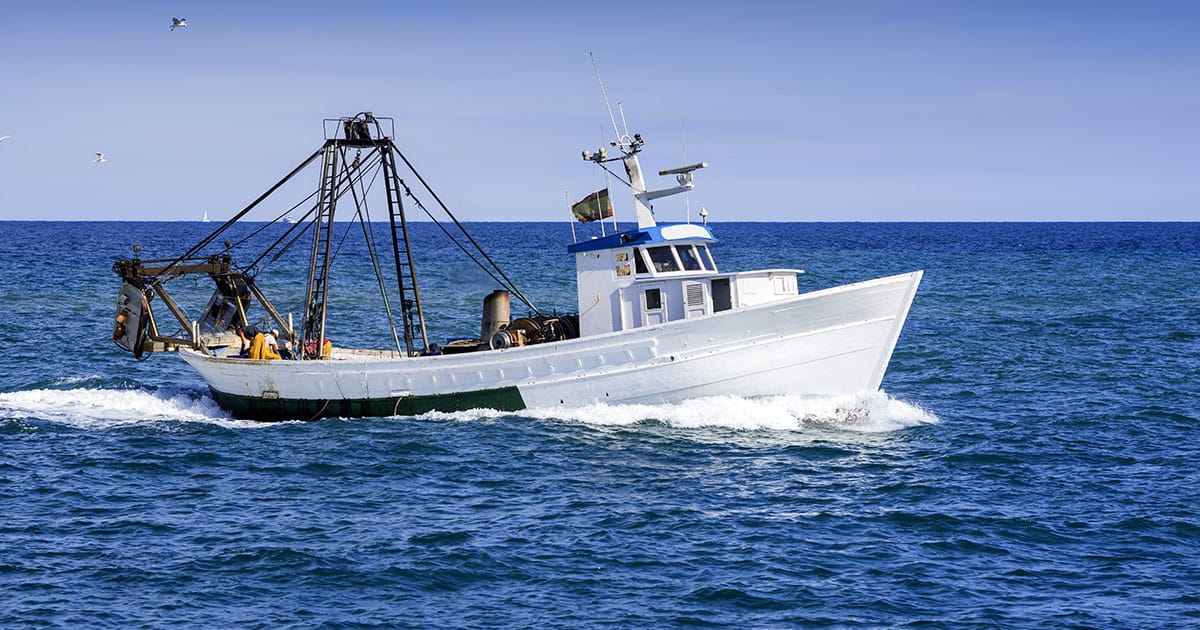
Convex Seascape Survey scientists are studying the impact of fishing methods that use towed nets that are dragged along the seafloor, such as trawling and dredging.
These methods are the main way humans disturb ocean sediments—the world’s largest reservoir of organic carbon—but there is disagreement about the amount of carbon these methods release.
The new study, led by researchers at the University of Exeter, begins to untangle this mystery.
“To find out how much carbon is being released by these fishing methods, we need to know how much of the seabed is actually being disturbed,” said Mollie Rickwood from the Centre for Ecology and Conservation on Exeter’s Penryn Campus in Cornwall.
“The best data available is from European fishing vessels, and previous research has used European fishing gear metrics to estimate the area of seafloor disturbed globally.
“Our main finding is that vessel and gear sizes vary a lot from country to country—so using European data to make global estimates is likely to lead to large inaccuracies in the amount of the seafloor trawled, and therefore how much carbon could be released to the atmosphere.”
The new paper demonstrates the need for good regional data on the size of fishing vessels and gear to allow accurate estimates of seafloor disturbance.
“At present, this is almost impossible due to the big European bias in existing data, as well as a lack of standardized reporting of fishing gear,” Rickwood continued.
“Our paper is a ‘call to arms’ to address these knowledge gaps and encourage global collaboration between science and industry to make this data available.”
The paper, published in the journal Fish and Fisheries, is entitled: “Regional variation in active bottom-contacting gear footprints.”
The Convex Seascape Survey, an ambitious five-year global research program, is the largest attempt yet to build a greater understanding of the properties and capabilities of the ocean and its continental shelves in the earth’s carbon cycle, in the urgent effort to slow climate change.
“Ocean carbon stores could be more secure than those on land, where forests, bogs, and tundra are increasingly impacted by wildfire, flood, and drought. So, it is critical we understand how safe carbon is once it is locked away in the seabed,” said Professor Callum Roberts of Exeter University, who leads the Convex Seascape Survey.