“The global surface seawater pH has already decreased by 0.1 units since pre-industrial times, representing a 30% increase in acidity,” shares Zhigang Yang, lead author of a new study published in Environmental Chemistry and Ecotoxicology. “These dual stressors present unprecedented threats to aquatic ecosystems.”
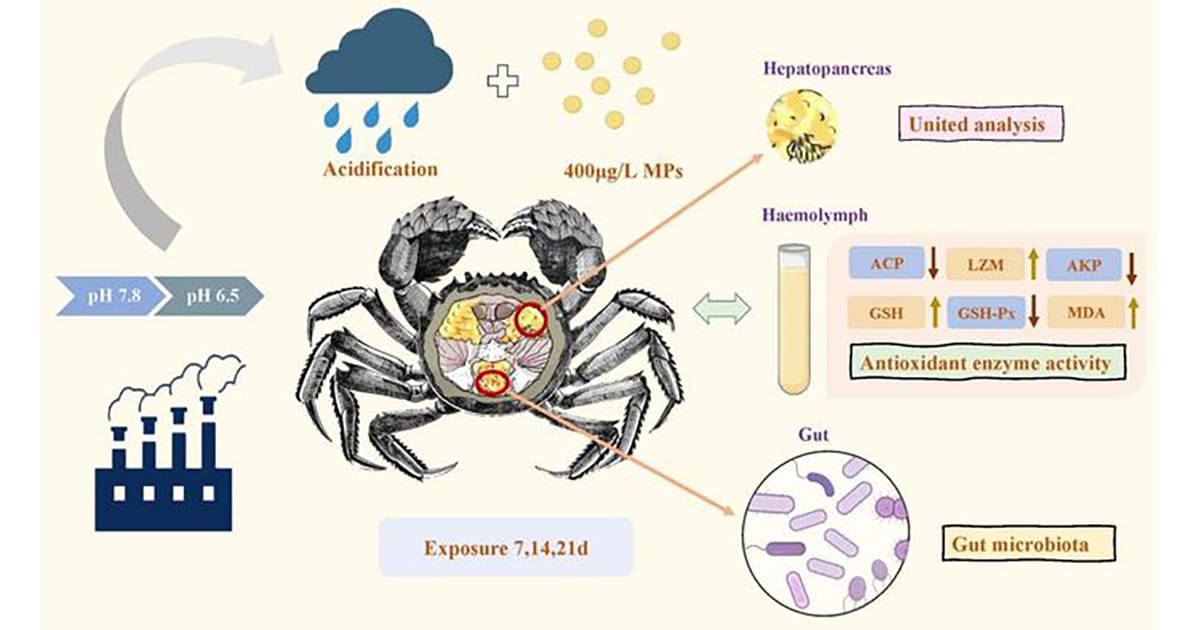
Using Chinese mitten crab (Eriocheir sinensis) as a model organism, the research team employed a 21-day exposure experiment integrating enzyme activity assays, gut microbiota profiling, and hepatopancreas metabolomics to investigate individual and combined effects of low pH and polystyrene MPs.
The key findings include: (1) Combined low pH (6.5) and MPs exposure synergistically exacerbated oxidative damage and immune suppression; (2) While MPs alone primarily disrupted pyrimidine metabolism, co-exposure significantly impaired the TCA cycle and arginine biosynthesis while activating serotonin metabolism; (3) Gut microbiota maintained α-diversity but showed substantial COG functional alterations.
“Our results demonstrate how freshwater acidification amplifies MPs toxicity in crustaceans through immune-metabolic crosstalk,” says Yang. “They provide novel mechanistic perspectives for ecological risk assessment of multiple environmental stressors under climate change scenarios.”
The researchers encourage future research to incorporate more environmentally relevant MPs such as rubber and fibers to further enhance ecological relevance.