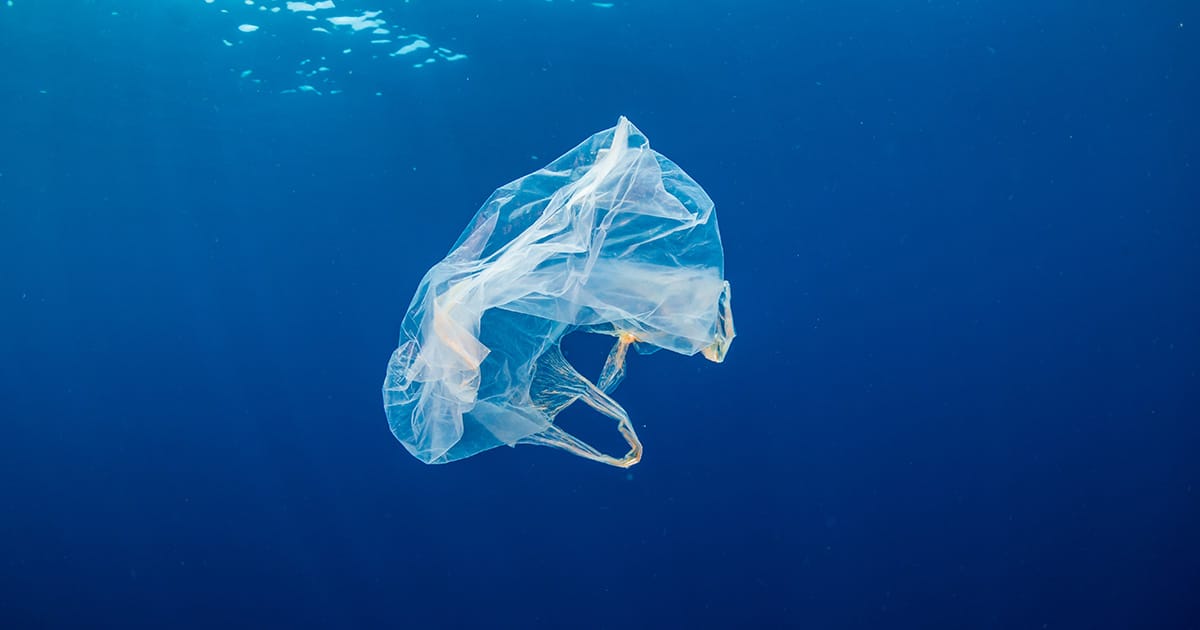
Microplastics (plastic particles under 5mm) are a widespread environmental pollutant, with more than 120 trillion estimated to have accumulated in the global ocean. Upon entering the environment, microplastics are rapidly colonized by diverse microbial communities, forming what is known as the ‘Plastisphere’.
The ‘Plastisphere’ is a term given to the novel microbial communities that live on discarded plastic in the environment, which is distinct from its surroundings and has been suggested to serve as a pool of both pathogenic and antimicrobial-resistant (AMR) bacteria.
Owing to the frequent omission of other appropriate materials, such as natural substrates, with which to compare in previous studies, there is a lack of scientific evidence supporting the unique risks posed by microplastics through the enrichment and spread of AMR pathogens.
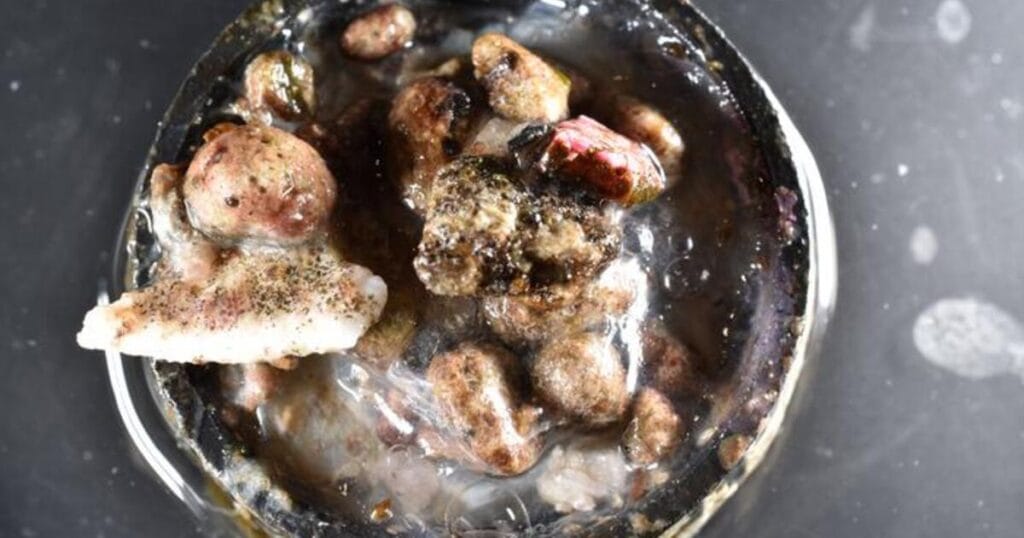
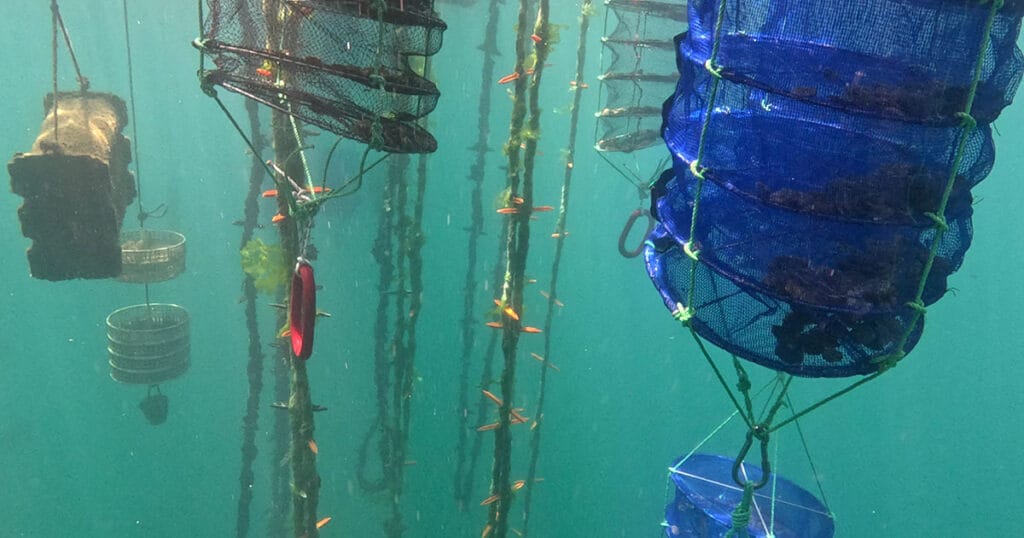
This study, by scientists at Plymouth Marine Laboratory and the University of Exeter, investigated selective colonization by a sewage community on environmentally sampled microplastics, involving three different polymers, sources, and morphologies alongside a natural substrate (wood), inert substrate (glass), and free-living/planktonic community controls.
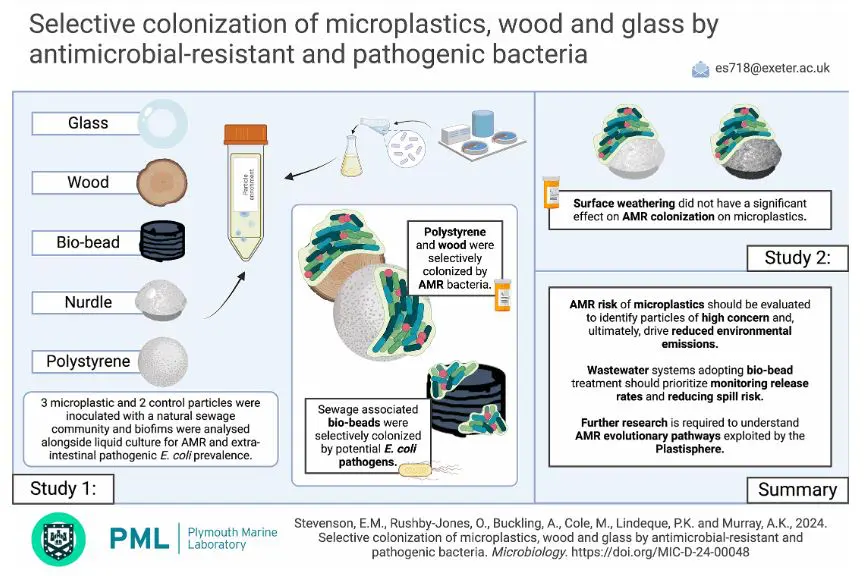
Summary of key findings
- Polystyrene and wood were selectively colonized by AMR bacteria
- Bio-beads selected for potential Escherichia coli pathogens
- Surface weathering did not significantly influence AMR colonization
This study showed that marine plastic substrates served as a platform for the selective growth of bacterial communities responsible for diseases in both humans and animals. Compared to controls, polystyrene and wood were found to enrich AMR bacteria, and bio-beads enriched strains of Escherichia coli, which can cause diarrheal illnesses.
Interestingly, under ‘normal’ circumstances, the community composition is largely driven by the external community and environment. Yet, in this study, all particles were exposed to the same environment, suggesting that the selective colonization observed is a result of substrate-specific drivers.
Furthermore, given that there was no difference in the size of the particles used in this study, this suggests that there are specific differences in particle characteristics that affected the attachment of AMR or pathogenic bacteria.
There are also reasons to suggest that the attachment of bacteria to plastics may make them more likely to become resistant to antimicrobial treatment, such as the dynamics of the microbial community that attaches to the material and previous exposure to plastic-associated chemicals. However, further research is required to fully understand whether plastics, specifically microplastics, pose a greater risk than natural debris in supporting these disease-causing or drug-resistant microbial communities.
Lead author of the study, Emily Stevenson, who is a Ph.D. student at the University of Exeter and Plymouth Marine Laboratory, commented: “By identifying particles of greater concern for AMR risk, we can recommend improvements to waste management or sewage treatment, with the aim to reduce emissions of these materials into the environment. We would like to see policy recommendations that include proposed improvements to environmental monitoring of both microplastics and antimicrobial micropollutants. We also suggest that efforts to reduce the spill of bio-beads should be prioritized considering their effect on E. coli communities.”