Since life began in the ocean, it has diversified into a wide variety of different organisms. However, the true extent of marine diversity remains unknown, as do many species and their ecologies. Investigating the biological mechanisms of marine life can not only provide a deeper understanding of the life cycles and evolution of these organisms but can also facilitate conservation efforts. These studies may lead to the identification of new molecular pathways, enzymes, and products that can be useful in medicine, and they can help improve the resilience of life in the face of climate change. The challenges facing researchers trying to unravel these complex mechanisms are enormous, however, and call for broad collaboration between different scientific disciplines and laboratories.
To address these challenges, OIST and CNRS will work together to promote exchange and collaboration between laboratories operating in the Western Pacific region, the largest and most complex oceanic area on Earth. Rooted in current research collaborations in the areas of ecology, evolution, and development of coral reef fishes and a shared desire to advance the study of marine biology in the Western Pacific region, OIST, and CNRS have agreed to further their relationship by establishing this International Research Laboratory. The lab will be located at the OIST campus and will be directed by OIST Professor Vincent Laudet.
OIST and CNRS have been collaborating since 2022 by co-hosting symposia, co-authoring research papers, and jointly supervising Ph.D. students, and the establishment of IRL EARLY will serve to strengthen and advance this productive relationship.
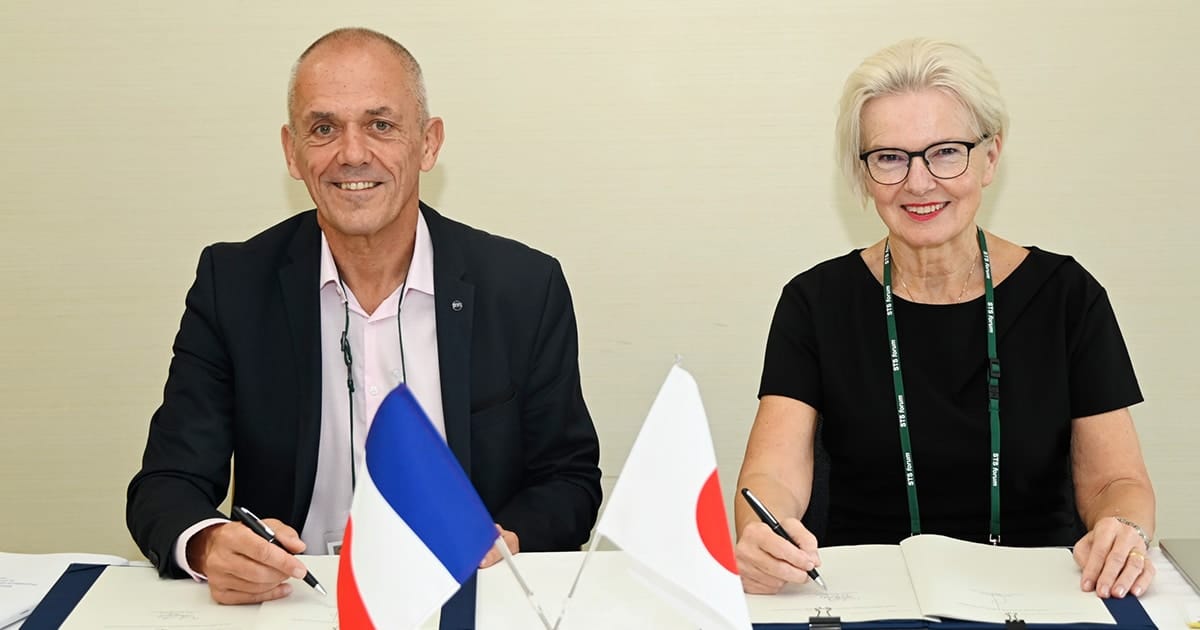
During the signing ceremony, OIST President Dr. Karin Markides said, “We believe this collaboration with CNRS will be a cornerstone for increasing global attraction to the important area of marine biology. OIST is a young and agile institution with a vibrant research environment in proximity to natural surroundings that are unique for exploring the coral reef marine ecosystem. The IRL EARLY at OIST will become a hotspot for marine biology in Japan. Furthermore, we expect the collaboration with CNRS will bring OIST closer to Europe and emerging global research opportunities that are in line with OIST’s areas of strength. We look forward to working with CNRS to advance research that contributes to a sustainable society through this international network.”
Dr. Antoine Petit, CEO of CNRS, commented, “We are very happy to sign this agreement because international cooperation is essential to tackle problems like climate change and biodiversity loss that need to be addressed at the global level. OIST’s activities are clearly complementary to those of the CNRS. The IRL EARLY will, therefore, multiply exchanges and joint research projects, and I am sure it is the beginning of a very rich history for our two institutions.”
This program is partially supported by Japan’s Ministry of Education, Culture, Sports, Science and Technology’s (MEXT) program for “Forming Japan’s Peak Research Universities” (J-PEAKS).