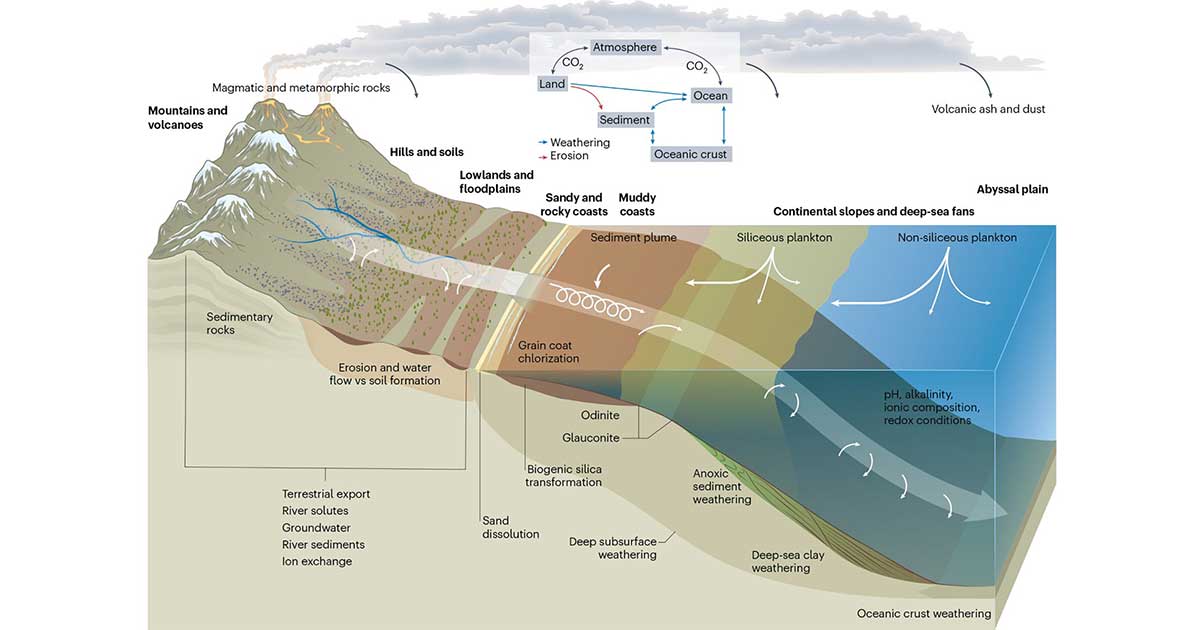
Weathering, or the breakdown of rocks by water and chemical reactions, removes carbon dioxide from the atmosphere and stores it as calcium carbonate in soils or the ocean. A new Nature Geoscience study links weathering reactions on the seafloor to the degree of weathering on land and proposes that the removal of carbon dioxide from the atmosphere through weathering needs to be studied as a continuum that includes processes on land and in the ocean.
Carbon sequestration through weathering that starts on land can slow down or sometimes even be reversed when sediments reach the ocean, which is why it’s important to study the system in full, said Jeremy Rugenstein, a Colorado State University associate professor of geosciences and co-author of the paper. The study holds implications and caveats for enhanced weathering technologies, which is an idea for removing carbon dioxide from the atmosphere by speeding up the weathering process on land.
“For example, if we weathered a lot of rock at the Earth’s surface and eventually that material makes it to the ocean, it could actually reverse weather and thereby cancel out the CO2 removal that occurred via enhanced weathering,” Rugenstein said. “Unfortunately, we know so little still about reverse processes that the role of reverse weathering in canceling out enhanced weathering remains a major open question.”