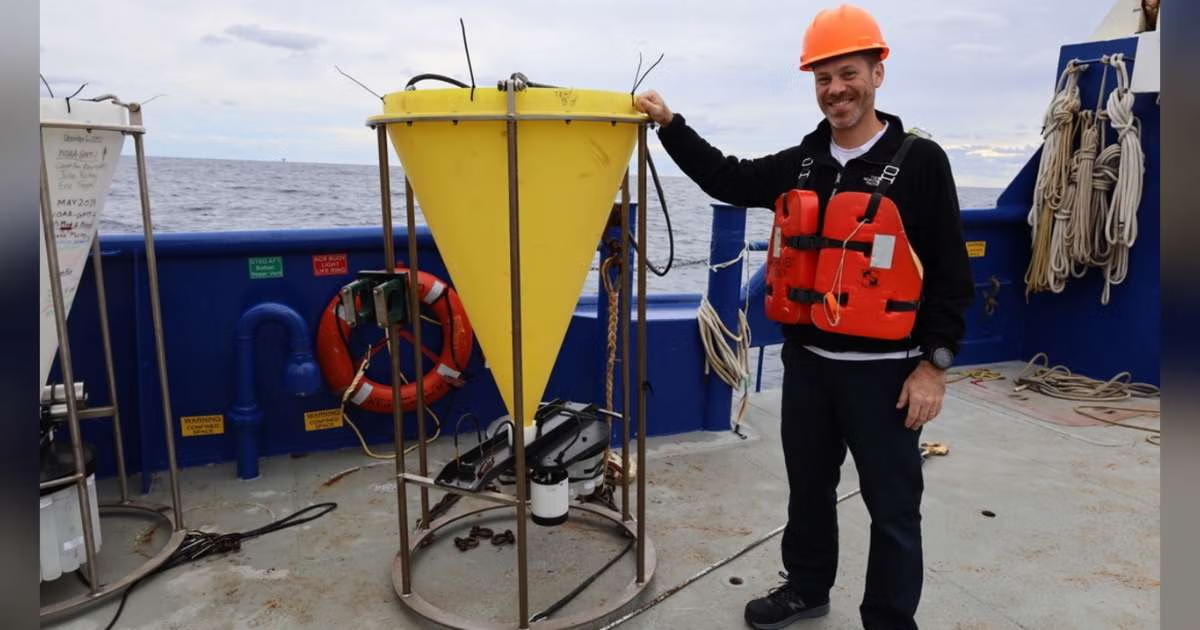
“This collaboration builds on the 20-year partnership between NOAA and Mississippi State University through the Northern Gulf Institute,” said Steve Thur, Ph.D., NOAA assistant administrator for Oceanic and Atmospheric Research. “CINGA will advance and support NOAA’s mission to apply science-based decision-making to the northern Gulf region.”
The selection comes with an award of up to $100 million over the course of five years, with the potential for a five-year renewal based on successful performance. NOAA selected Mississippi State University, which is located in Starkville, Mississippi, after an open, competitive evaluation. CINGA will be affiliated with NOAA’s Atlantic Oceanographic and Meteorological Laboratory in Miami, Florida.
The regional consortium will include affiliated faculty and staff at nine institutions to leverage their specialized capabilities. Partner institutions include Texas A&M University, Louisiana State University, the University of Southern Mississippi, Jackson State University, Florida A&M University, the Dauphin Island Sea Lab, Florida State University, and the University of Alabama–Huntsville.
By integrating research and technology, CINGA aims to improve natural resource management, enhance coastal resilience, and support data-driven decision-making for local, regional, and national communities.
Major research themes that will be addressed by the new cooperative institute include:
- Advancing technology for environmental modeling and analysis;
- Improving forecasting capabilities for weather, ocean, and hazards associated with environmental variabilities;
- Promoting sustainable development of marine and coastal resources; and
- Enhancing data stewardship and accessibility across the Gulf ecosystem.
NOAA’s cooperative institutes are centers of excellence that use their research and educational expertise to support NOAA’s mission and build talent for the future workforce in shared areas of expertise.
CINGA joins 16 cooperative institutes consisting of 80 universities and research institutions across 33 states and the District of Columbia. These research institutions provide strong educational programs that promote student and postdoctoral scientist involvement in NOAA-funded research.