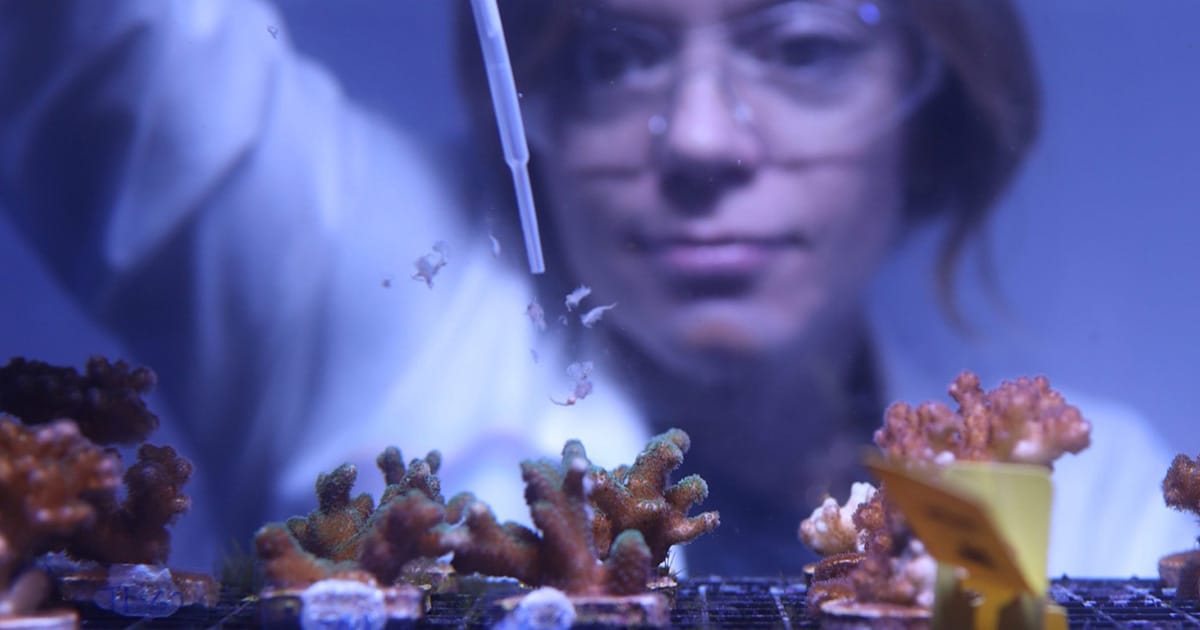
Researchers from the University of Technology Sydney (UTS) have discovered that coral larvae fed with tailored lipid supplements, including omega-3-rich oils and essential sterols, are stronger, faster, and more likely to survive and settle onto reefs.
The research, led by marine biologist Dr. Jennifer Matthews and published in Communications Biology, marks a major advance for coral aquaculture and restoration science.
Reef restoration projects often focus on increasing larval supply, yet they are frequently hampered by low post-settlement survival.
“Less than one per cent of coral larvae typically survive their first year,” said Dr. Matthews. “Developing the right nutritional strategies and providing the correct balance of lipids, such as sterols, could provide a practical way to improve these outcomes.”
The study revealed that coral larvae actively consume and metabolize these essential fats, confirming that early nutrition plays a key role in coral development and resilience.
“We’ve shown that specific lipid supplements, especially sterols, enhance larval performance and help juvenile corals cope with stress,” said Dr. Matthews. “This opens up exciting possibilities for restoration projects, where every extra surviving coral can make a real difference to reef recovery.”
The UTS research team is now taking this innovation from the lab to the reef, working in partnership with Indigenous Sea Rangers, Dr. Eric Fisher from GBR Biology and Reef Magic, to trial these nutritional interventions directly on the Great Barrier Reef.
“These field trials are helping us understand how nutritional support can be scaled up to real-world restoration,” said Dr. Matthews. “It’s a wonderful collaboration between researchers, Traditional Owners and reef practitioners, with everyone working together to give corals a fighting chance.”
While no single solution can halt reef decline, Dr. Matthews believes nutritional science could become a vital tool in the broader restoration toolkit.
“As oceans warm, we need every advantage we can give these corals,” she said. “Enhancing their early survival through better nutrition could help tip the balance toward recovery rather than loss.”