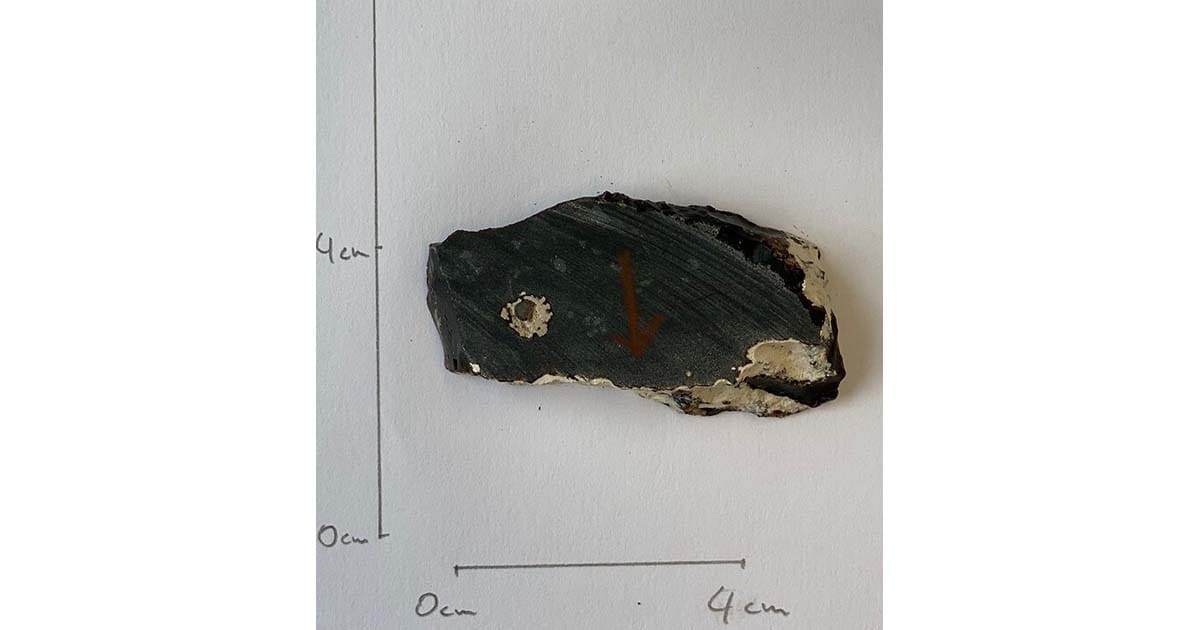
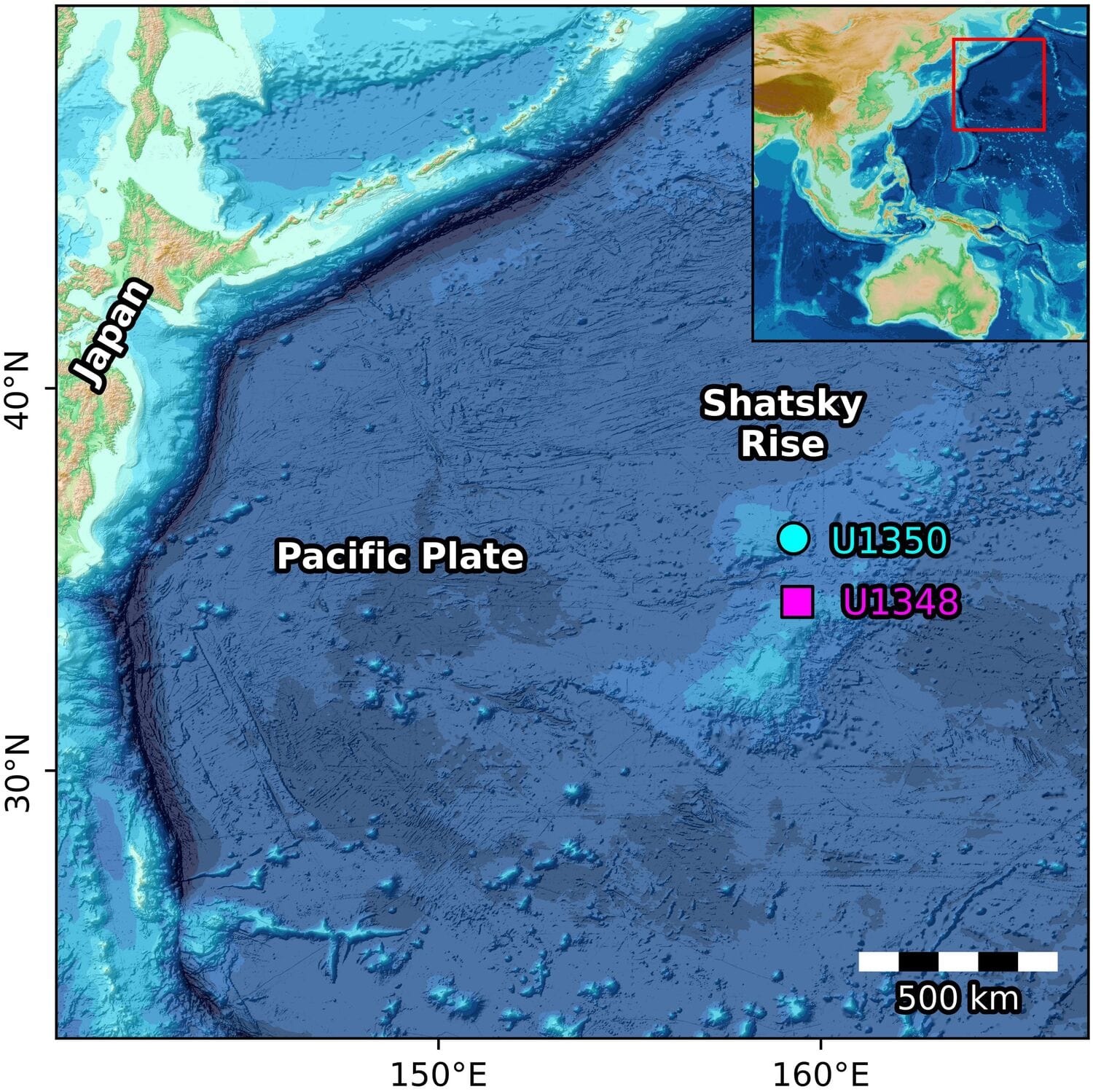
Cherts from the Shatsky Rise oceanic plateau in the western Pacific east of Japan, together with data from international drilling projects, show that the composition of the three oxygen isotopes—known as 16O, 17O, and 18O—in rocks changes with the heat flow, which varies in intensity depending on their location on the seafloor. In places where the Earth’s oceanic crust has only recently formed from rising magma, more heat flows to the Earth’s surface. Older oceanic crust, on the other hand, has a low heat flow because the crust has had time to cool down. This is the first time that researchers have managed to measure the amount of energy flowing through the Earth’s crust using oxygen isotopes in cherts. They used their own calculation model and verified their results with independent measurements in the world’s oceans.
“Our method enabled us to measure—for the first time—how much heat flowed through the Earth’s crust in the past and thus interpret and understand a piece of Earth’s history,” explains lead author Oskar Schramm, who carried out the research at Göttingen University’s Geosciences Centre and is now pursuing research at Ruhr University Bochum. Professor Michael Tatzel, who supervised the research, added: “Next, we want to clarify why some cherts show unusual oxygen isotope patterns that were not in equilibrium with the seawater at the time they formed. Initial findings from our recent findings suggest that volcanic ash may play a crucial role.”