This matters because millions of crabs migrate along coastlines each year to reproduce, and disrupting these patterns could affect marine food chains.
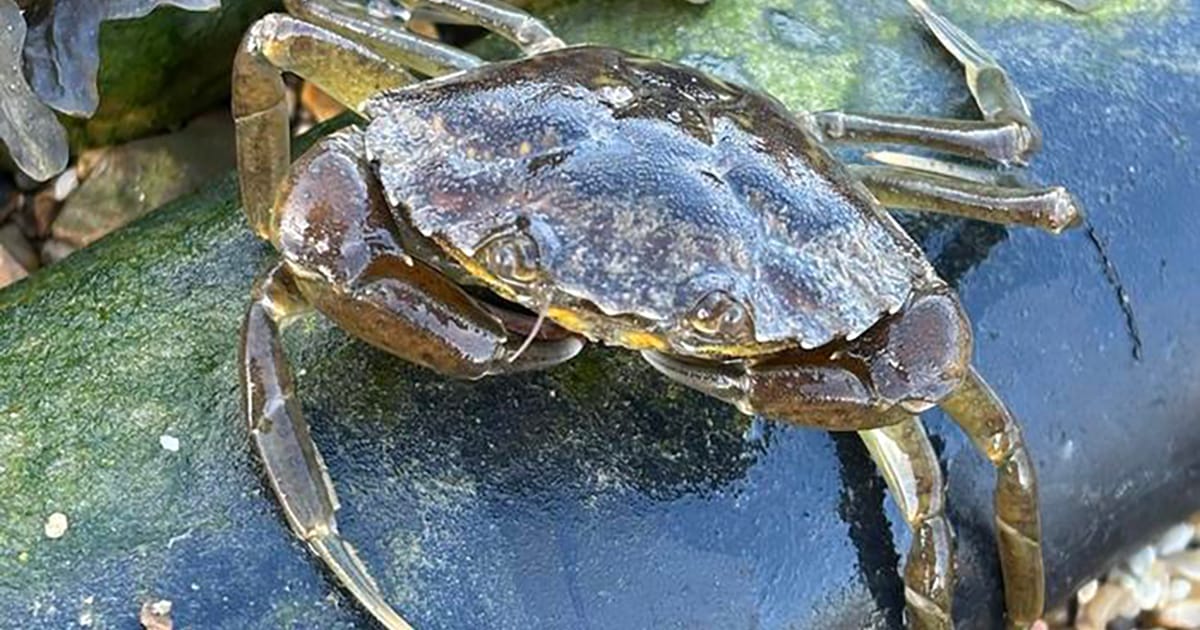
The study, conducted by Ph.D. student Elizabeth James from the University of Portsmouth’s Institute of Marine Sciences, exposed 120 juvenile common shore crabs (Carcinus maenas) to electromagnetic fields found near underwater power cables. The results showed significant behavioral differences between male and female responses.
Female crabs were on average almost twice as likely to stay near areas with electromagnetic fields compared to those without them (between 87 and 131 percent more time). Interestingly, male crabs were not as affected by the electromagnetic fields, showing no consistent spatial preference across different strengths.
Ms. James said, “This is the first study to demonstrate sex-specific responses to submarine power cable electromagnetic fields in crabs. The fact that we’re seeing such clear behavioral differences between males and females, even at relatively low, as well as high electromagnetic field strengths, suggests that we need to think much more carefully about how offshore energy infrastructure might be affecting marine ecosystems differently than we previously thought.”
The research team used a controlled laboratory setup with Helmholtz coils—specialized equipment that creates controlled magnetic fields—to generate precise electromagnetic fields ranging up to 3,200 μT (levels which can be emitted by submarine power cables). Over 10-minute trials, researchers tracked crab behavior, including distances moved, zone preferences, and mobility levels, using advanced video tracking software.
The amount female crabs moved was also reduced by more than a third (38 percent) at moderate field strengths (1,000 μT). There were even noticeable effects at low EMF levels below 250 μT.
The findings, published in Environmental Science & Technology Letters, suggest that as offshore wind farms expand globally, the sex-specific impacts on crustacea could have significant ecological consequences.
If female crabs are drawn to stay near underwater cables instead of continuing their natural migrations, this could affect where they lay their eggs and ultimately impact crab populations along entire coastlines.
While underwater cables will cover less than 0.1 percent of the ocean floor by 2050, they could still cause major problems if they’re placed in the wrong spots—like along routes where crabs migrate to breed. The researchers say scientists need to study how these cables affect male and female sea creatures separately, not just assume they respond the same way.
Co-author Professor Alex Ford from the University of Portsmouth’s School of the Environment and Life Sciences added: “The sex of an animal often gets overlooked when we look into the impact of pollution on aquatic life. With chemical pollutants, sometimes the males are more sensitive because females are able to excrete their contaminants with the eggs or offspring. In this instance, the female crabs were more sensitive, which might be down to a unique ability to detect electromagnetic fields, which we are exploring further.
“This research builds on our international efforts to incorporate the effects on behavior from many types of pollution when assessing human impacts on our ecosystems. As we rapidly expand offshore renewable energy to meet climate targets, we need to ensure we’re not inadvertently creating new environmental problems while solving others.”
The University of Portsmouth has an established track record of investigating human impacts on marine life. Previous studies have examined how plastic chemicals affect marine reproduction, monitored how pollution affects the behavior of marine life, and assessed the presence of “forever chemicals” (PFAS) in coastal waters. Professor Ford’s collaboration with the Marine Conservation Society on PFAS contamination recently informed a UK Parliamentary inquiry, demonstrating the University’s commitment to research that influences environmental policy.