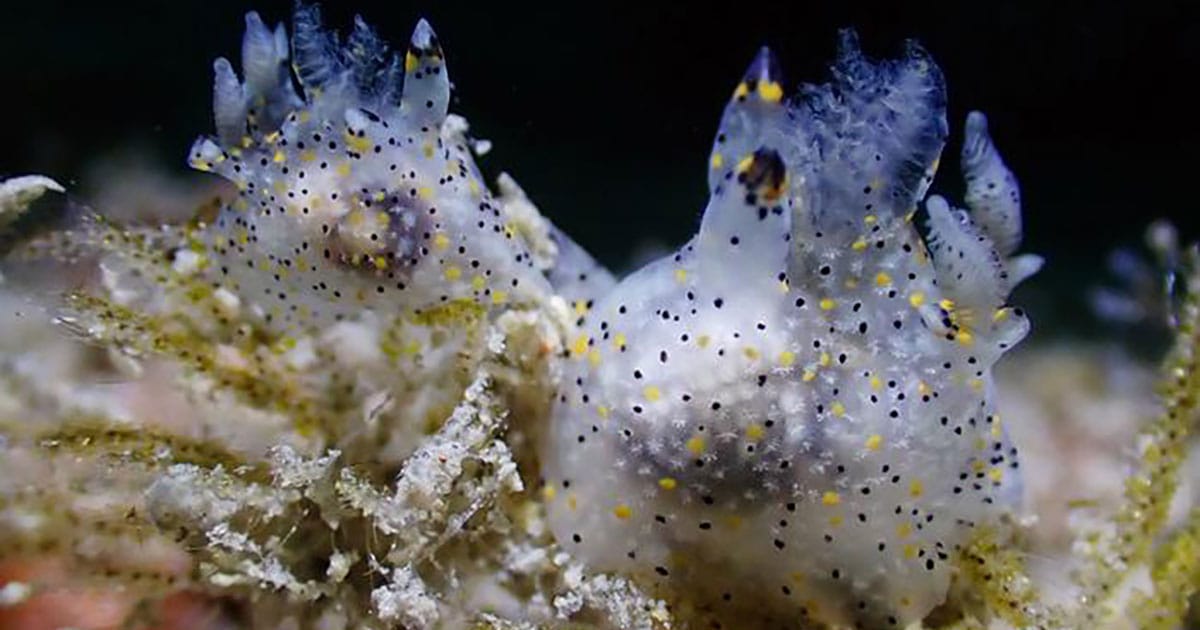
“Taiwanese divers call it ‘sesame’ in Chinese, and it is also small like a sesame seed, hence the name,” the research team explained regarding their decision to honor the local nickname in the scientific nomenclature. This tiny nudibranch, which measures less than three millimeters in length, was first spotted by lead author Ho-Yeung Chan during a recreational dive in 2019.
The discovery was a stroke of luck that began during Chan’s undergraduate studies. “During a recreational dive in the summer during the undergraduate study of HY Chan in 2019, he accidentally discovered Thecacera sesama sp. nov. in northern Taiwan waters”, the team shared. Despite its unique appearance, the importance of the find was not immediately obvious. In a modern twist on traditional taxonomy, Chan “never realized Thecacera sesama was a new species until he consulted the sea slug expert ‘Hsini Lin, teacher’ on Facebook.”
Documenting the species proved to be a significant logistical feat due to the volatile environment of the Keelung coast. The research team noted that the most challenging part of the study was the unique weather conditions of the region. Taiwan experiences frequent typhoons in the summer and large waves during the winter monsoon season, with sea temperatures often dropping below 16 degrees Celsius. These factors mean that diving for nudibranch research is only possible for about four months of the year, making sightings of such tiny creatures entirely a matter of chance.
The life of T. sesama is remarkably focused, as the researchers observed that the species exhibits only four primary behaviors: feeding, searching, mating, and laying eggs on bryozoans, which are tiny aquatic invertebrates often called “moss animals”. Interestingly, the specific bryozoan that T. sesama calls home may itself be a species new to science.
From a broader ecological perspective, these vibrant mollusks play a vital role in the marine environment. “Nudibranchs are one of the key players in the marine food web”, the team stated. “They are extremely colorful and can be spotted on coral reef ecosystems. However, many nudibranchs are very small in size and are extremely difficult to spot underwater with the naked eye.”
The researchers believe that the discovery of T. sesama is just the tip of the iceberg for Taiwanese marine biology. Because many species are so small, many more are likely awaiting discovery and formal study. The full research on Thecacera sesama was published in the open-access journal ZooKeys on May 11, 2026.