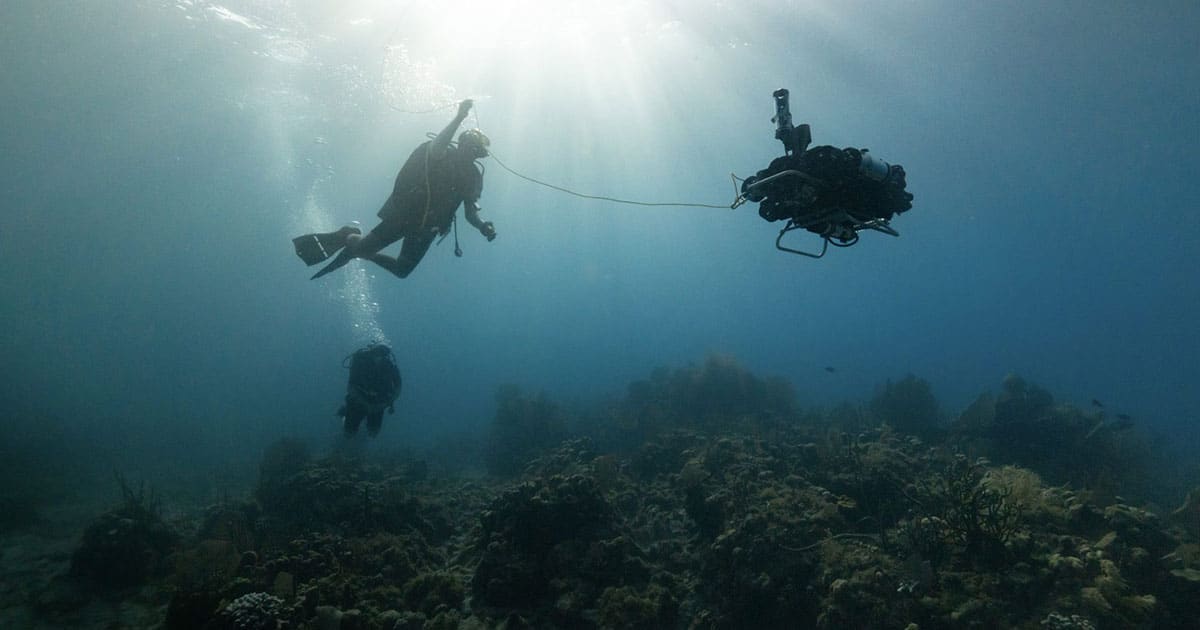
“We share common interests with the University of the Virgin Islands,” said Aran Mooney, a marine biologist at WHOI. “Improving our knowledge of the ecosystems in the Caribbean by partnering with our friends and colleagues in the region helps ensure we’re being as efficient as possible.”
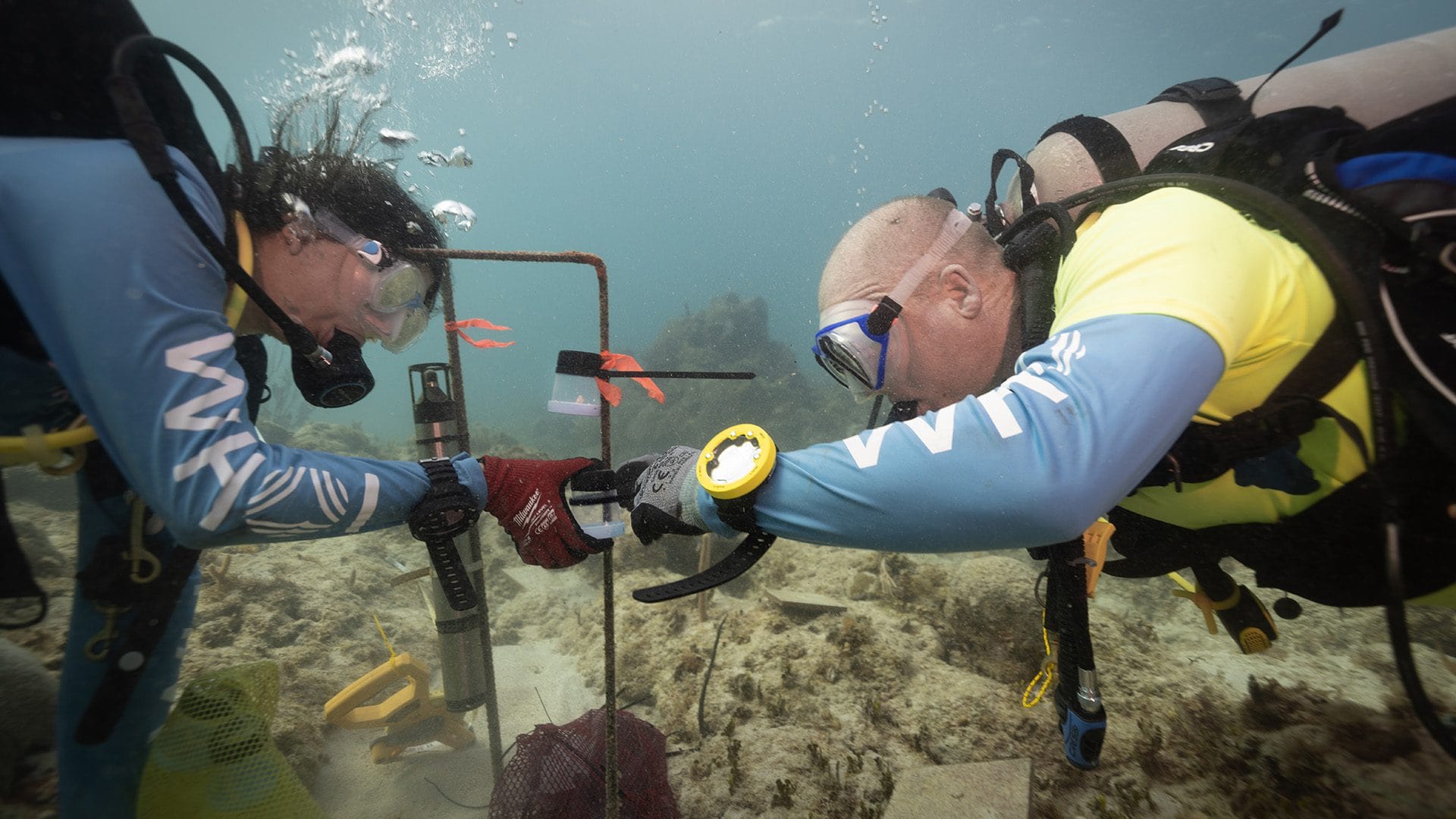
MIT-WHOI Joint Program student Nadège Aoki (left) and WHOI biologist Aran Mooney placing cups of larvae at the reef site in the US Virgin Islands. (Image credit: Woods Hole Oceanographic Institution)
WHOI and UVI have a long history of collaboration, including studying the impacts of coral chemical compounds, coral disease, reef restoration science, and the teaching and support of students in various ways. The MoU establishes areas of mutual interest where the two institutions will collaborate, including physical oceanography, ocean acoustics, robotics, microbial ecology, coral reefs and surrounding ecosystems, marine geology, marine chemistry, marine biology, atmospheric sciences, and ocean engineering. It also lays out that the two institutions will cooperate via the exchange of academic staff and students, research and academic activities, and the exchange of academic materials and other information.
“UVI’s Center for Marine and Environmental Studies (CMES) is excited by the new opportunities outlined in the MoU renewal,” said Paul Jobsis, Director of the Center for Marine and Environmental Studies, University of the Virgin Islands. “The shared resources of WHOI and CMES will allow us to tackle some of the most important ecological problems facing our marine environment. This partnership will provide more opportunities for students and researchers from both organizations.”
The scope and scale of threats facing coral reefs demand new ways of approaching the questions that need to be answered in order to ensure the future of reefs worldwide.
“The oceans are global, and coral reefs are under threat,” Mooney continued. “It’s important that we act in a collaborative manner so that we can support the lives and livelihoods of those who rely on their rich ecosystems and valuable resources.”
For more information on WHOI’s Reef Solutions Initiative, visit: https://reefsolutions.whoi.edu/