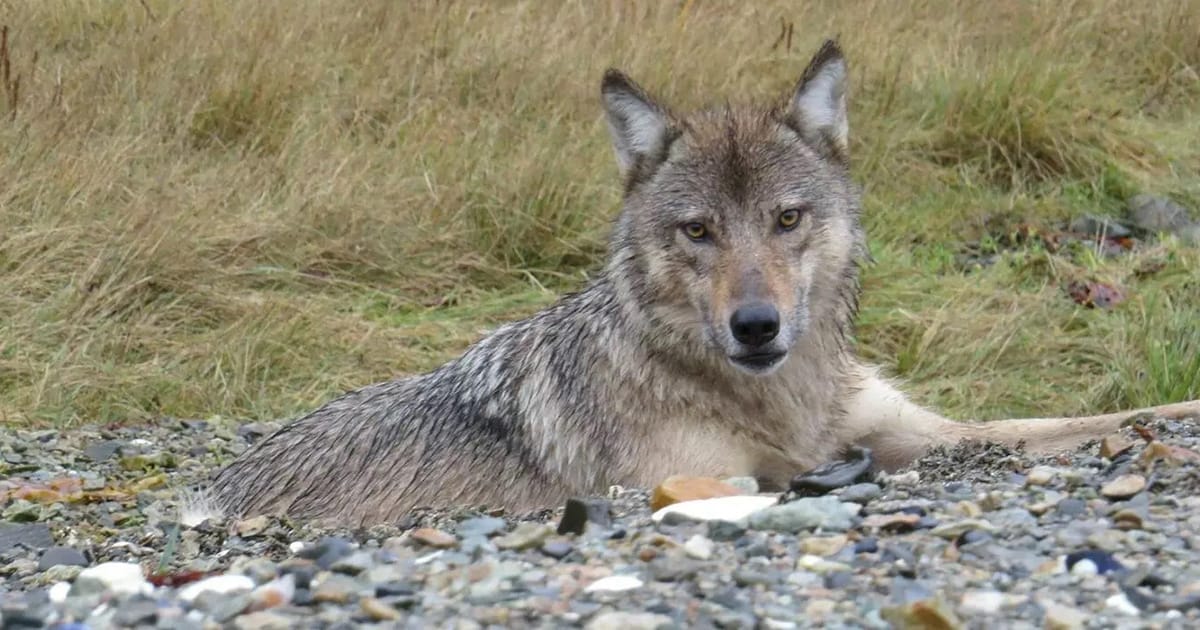
The wolf, No. 202006, was only four years old.
“We spent quite a bit of time trying to figure out the cause of her death by doing a necropsy and different analyses of tissues,” said Gretchen Roffler, a wildlife research biologist with the Alaska Department of Fish and Game.
“What finally came up was really unprecedented concentrations of mercury in this wolf’s liver and kidneys and other tissues.”
Roffler was put in touch with Dr. Ben Barst, Ph.D., an assistant professor in the Faculty of Science at the University of Calgary who was working at the University of Alaska Fairbanks at the time.
They, along with a team of other scientists, have now published new research in the journal Science of The Total Environment that shows wolves eating sea otters have much higher concentrations of mercury than those eating other prey such as deer and moose.
Mercury Found in High Concentrations in Predators
Barst, an expert in ecotoxicology, noted mercury is a naturally occurring element humans release from the Earth’s crust through coal combustion and small-scale gold mining.
“It’s a really weird metal in that it’s liquid at room temperature, or it can be a vapor,” he said. “When it gets into the atmosphere in its elemental form, it can travel for really long distances.”
Barst added it also gets converted into methyl mercury when it gets into aquatic environments.
“It’s an organic form of mercury that really moves quite efficiently through the food web, and so it can reach high concentrations in predators that are tapped into aquatic food webs,” he said. “So, we see higher concentrations in wolves that are tapped into a marine system.”
The latest research compares wolves from Pleasant Island—located in the Alaska Panhandle region, west of Juneau—with the population on the mainland adjacent to the island, as well as wolves from interior Alaska.
“The highest concentrations are the wolves from Pleasant Island,” said Barst, noting that the mainland population mostly feeds on moose and the odd sea otter.
He commented there could be a number of factors driving the higher concentrations of mercury, but they are still researching several possibilities.
Mercury-Wolf Health Impact Examined
Researchers are also doing more work to determine mercury’s role in impacting wolf health, as it remains unclear exactly what caused the death of Wolf No. 202006.
Barst notes, however, that years of data collected by Roffler show that 70 percent of the island wolves’ diet is sea otters.
“They’re eating so many sea otters that they’re just getting this higher dose of mercury, and it accumulates over time,” he said.
There are other populations of wolves in Alaska as well as in B.C. that appear to be eating sea otters.
“It turns out that this might be a more widespread phenomenon than we thought originally,” she said. “At first, I was surprised it was happening at all.”
It’s not yet known whether the sea otters off the B.C. coast also contain high levels of mercury.
Potential Link to Climate Change
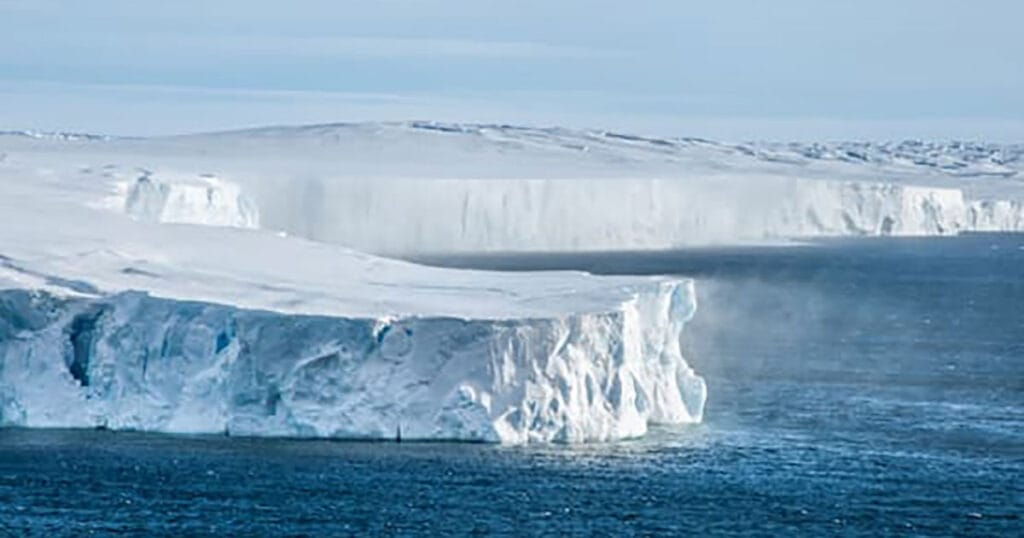
Back in Alaska, there’s a potential link to climate change due to the state’s shrinking glaciers.
“We know that glaciers can release a tremendous amount of mercury,” he said. “In coastal Alaska, glaciers are retreating at some of the most rapid rates in the world.
“With that melting of glaciers, you get release of the particulate bedrock, and some of that bedrock contains mercury, so we don’t really know the fate of that mercury. It may just get buried in sediments or it may actually be available for conversion to methyl mercury and get into the food web.
“That’s part of what we’re doing now.”