A new study led by NOAA’s Physical Sciences Laboratory examines how two global weather forecast models could provide several weeks’ warning of unusual US coastal water levels and boost future prediction capabilities.
The findings were published in the European Geosciences Union journal Ocean Science.
Currently, NOS’ Center for Operational Oceanographic Products and Services coastal flood predictions are available a few days in advance, along with Monthly High Tide Flooding and Annual High Tide Flooding outlooks based upon data from National Water Level Observation Network stations. These outlooks currently rely heavily on past patterns and trends, as well as knowledge of the rhythmic and very predictable nature of the tides.
The new research explored the potential to improve these outlooks by incorporating operational forecast models like those that provide the US seasonal temperature and precipitation outlooks, but which specifically integrate satellite observations of sea level height. These include the European Centre for Medium-Range Weather Forecasts’ Integrated Forecasting System (IFS) and the Centre National de Recherches Météorologiques climate model (CNRM).
“Our research demonstrates for the first time that current operational forecast models can reliably predict sea level on weekly time scales, which can be included in outlooks to improve their predicted risk of coastal high tide flooding for many US coastal locations up to six weeks in advance,” said lead author John Albers, a PSL scientist. “This could serve as the foundation for future high tide flooding outlooks two to six weeks ahead, giving coastal communities more time to prepare and reducing the risk to lives and property.”
Researchers compared the predictions made by these two forecast systems with real-world observations from US coastal tide gauges that had captured at least 10 years of data. They found that the IFS demonstrates improved forecast skill for lead times for up to six weeks, while the CNRM model improves forecasts out to two to three weeks. This extended predictability could be valuable for communities and emergency managers to prepare for potential flooding events in the future.
As part of this evaluation of forecast skill, researchers also made improvements to the forecasts by adding predicted air pressure effects and adjusting for land that’s slowly rising or sinking, which greatly improved prediction accuracy in many geographic areas. Forecast skill was better in the winter when coastal flooding tends to be worse.
Overall, Albers said the study underscores the significant potential of improving current forecast systems to provide valuable subseasonal coastal flood guidance. The next step is to test and validate the new ocean-coupled NOAA Global Ensemble Forecast System for high tide flooding outlooks, he said.
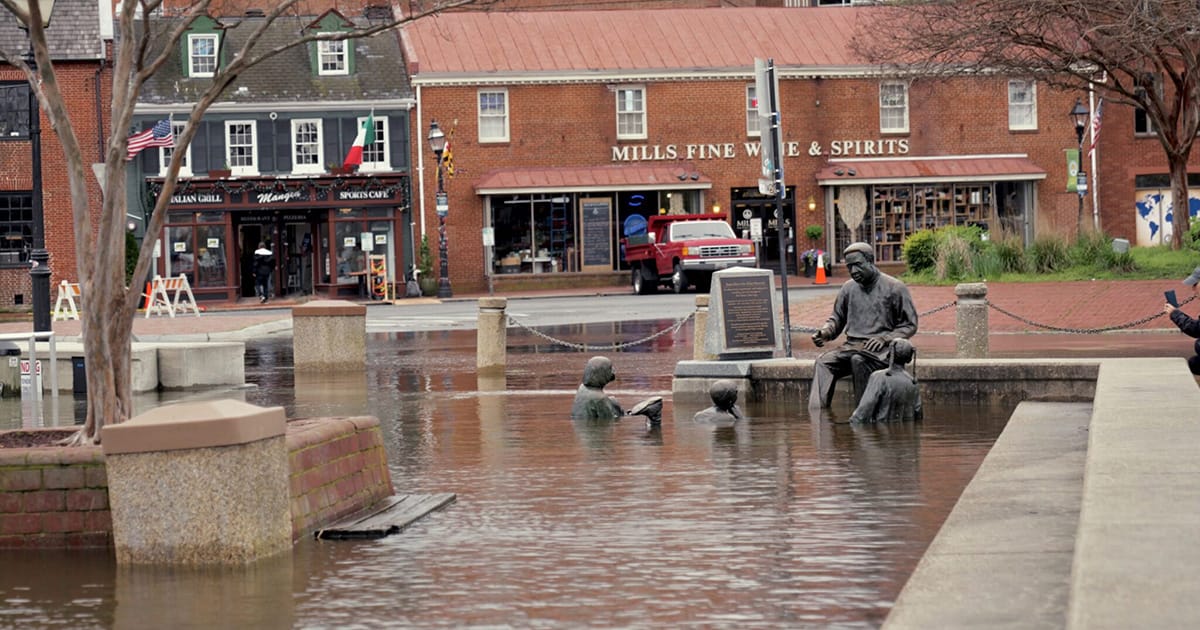
William Sweet, an NOS oceanographer, noted that during the past two years, the US has experienced the largest number of high tide flooding events on record.
“Communities need as much lead time as possible to mobilize flood responses,” said Sweet, a co-author of the study. “This emerging research should allow NOAA to someday provide longer lead times to help them prepare.”