“Indigenous Peoples continue to be caretakers of the Canadian Arctic; their cultural connection with the Arctic environment and ecosystem generates unique exposures to the zoonotic diseases discussed, as well as others not covered here,” writes Dr. Justin Penner, an infectious diseases physician at CHEO, Ottawa, Ontario, and Qikiqtani General Hospital, Iqaluit, Nunavut, with coauthors.
The Canadian Arctic includes three different bioclimates—subarctic, low arctic, and high arctic—over a vast geographic area, with Inuit, Gwich’in, and Athabaskan peoples representing the region’s Indigenous communities.
The authors urge clinicians with patients from the Arctic to apply a holistic perspective, respecting Inuit Qaujimajatuqangit, a term that describes Inuit Traditional Knowledge combined with the One Health principle. One Health asserts that diseases in humans are influenced by the interaction between humans, nature, and the animal world.
“Cultural proximity and interaction with the Arctic ecosystem are important factors in understanding some of the under-recognized infectious diseases within the region. Clinicians’ respect and understanding of these customs can highlight infectious exposures, guide clinical care, and inform prevention programs,” the authors write.
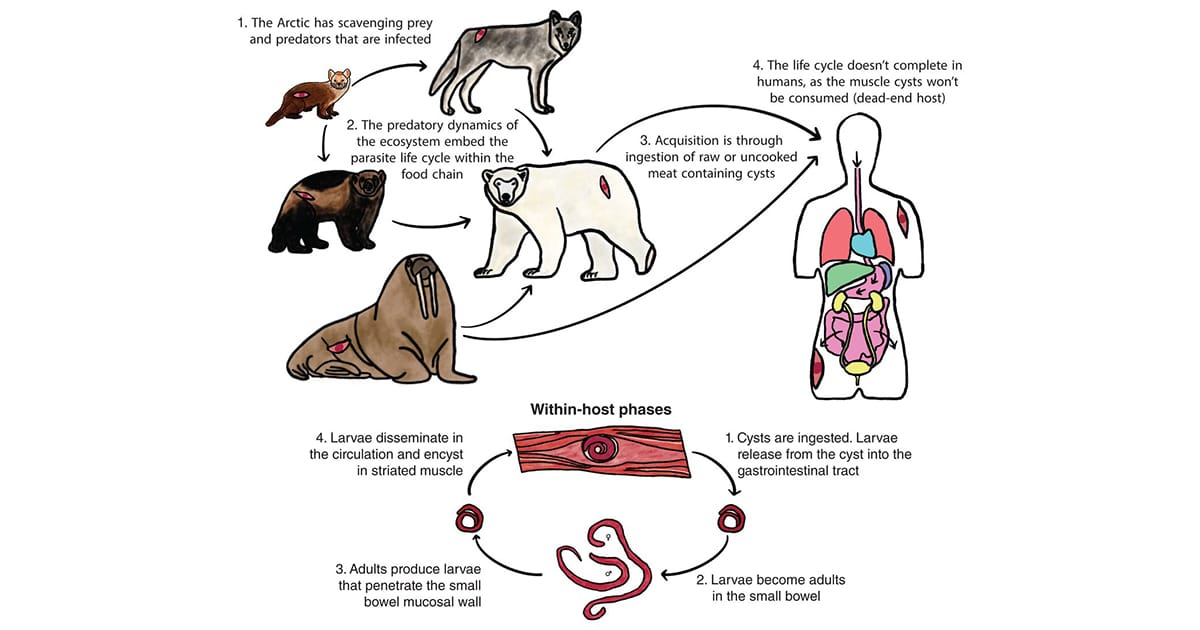
Risk factors for Arctic zoonotic infections include diets of “country foods”—wild game, fish, and sea mammals—that are consumed as part of a traditional healthy diet in many Arctic communities. Hunting, harvesting animals, preparing animal skins, and owning sled dogs are also risk factors for diseases acquired from animals.
Climate change in the Arctic is affecting the local ecosystem.
“Animal behavior is changing, including migration patterns, largely as a result of diminishing sea ice, which limits hunting. These factors can affect parasite life cycles. Melting permafrost has an impact on how food is processed, making practices like fermentation and ice-cellar storage less reliable. Warmer temperatures also promote the spread of insect vectors into higher latitudes, which will further affect Arctic ecosystems and cause the emergence of other infections in the region where populations are vulnerable,” the authors write.